REVIEW · HANOI
Vietnam Fishing village photography tours
Book on Viator →Operated by Momentlives Photography tours · Bookable on Viator
Sunrise fishing makes the best photos. This two-day Hanoi-area photography trip takes you to Nam Dinh beach during the morning return, when real work is happening and the light is soft for portraits and low-light shots.
I love two things most. First, the photo time runs from morning conditions into late light, so you get options for storytelling shots instead of one flat time slot. Second, you photograph the full chain: traditional fishing tools, the people sorting the catch, and even the processes of making salt.
The one drawback to plan for is logistics by nature: you should be ready for a full day out and some standing/walking on coastal ground, and the experience depends on good weather to run as scheduled.
In This Review
- Key highlights you should care about
- Nam Dinh beach at the morning return: the light and the action
- Wives sorting the catch: portraits with clear, human stories
- Hundreds of meters of net and men on stilts
- Salt-making and fishing tools: turn chores into photo essays
- Afternoons with boat and net repairs
- Momentlives logistics: pickup, small group, and accommodation included
- Value of $408: what you avoid by not going alone
- Should you book this Vietnam fishing village photo tour?
- FAQ
- What time does the tour start?
- How long is the Vietnam fishing village photography tour?
- Where is the tour based?
- Is pickup included?
- Is the group size limited?
- What’s included in the price?
- Do I get a ticket on my phone?
- What if the weather is bad?
- Can I cancel for a full refund?
Key highlights you should care about
- Sunrise-to-sunset style shooting time for portraits, low light, and composition
- Nam Dinh morning return scenes: boats come in, catch gets sorted, sales happen by the beach
- Big-net teamwork and stilt fishing that create strong visual action and scale
- Salt-making photography plus traditional fishing tools for a deeper story beyond the water
- Max 6 people for a calmer pace and more time with your guide
Nam Dinh beach at the morning return: the light and the action
This is a “work-first” kind of photography day. Early in the morning, hundreds of fishing boats come back to Nam Dinh beach after night fishing. The beach isn’t staged. People are busy, focused, and moving with purpose.
What makes this great for photos is how the scene changes in layers. One moment you’re seeing boats pulled ashore; the next you’re watching catch being handled, sorted, and traded close to where it’s caught. That gives you both wide establishing shots and close-up details that actually add up to a story.
I also like that the timing supports more than one shooting style. You’re not just hunting for one perfect angle. The tour is designed around portrait opportunities and low-light conditions, which is exactly what you want when you’re photographing real faces and real hands doing real tasks.
If you’re the type who likes to arrive early, then stay late, this matches your pace. If you prefer strict comfort over sand and salt air, bring a realistic mindset. This is coastal work photography, not a museum walk.
You can also read our reviews of more tours and experiences in Hanoi.

Wives sorting the catch: portraits with clear, human stories
One of the best parts of the Nam Dinh scenes is the moment right after the boats land. While husbands handle getting boats ashore, their wives take over the catch. Sorting isn’t quick or random. It’s careful, meticulous, and done in a way that’s easy to read visually.
You’ll get a strong set of photo subjects:
- hands handling seafood
- sorting patterns (size, type, quality)
- expressions and concentration
- the quick transfer from boat work to beach-side selling
And then the chain continues. Buyers come in and transport the seafood to restaurants in town. That means you can build a photo story that goes beyond just the catch. You can show how the seafood moves from sea to plate.
For your own photos, think in sequences, not single images. Start wide enough to show context, then move in for texture and faces. The sorting moments are perfect for that. They’re not over-posed. People are already telling the story with their posture and rhythm.
This is also where respect matters most. Keep your distance until someone is aware of you, then shoot when the moment makes sense. You’ll get better images and you’ll feel better about the process.
Hundreds of meters of net and men on stilts
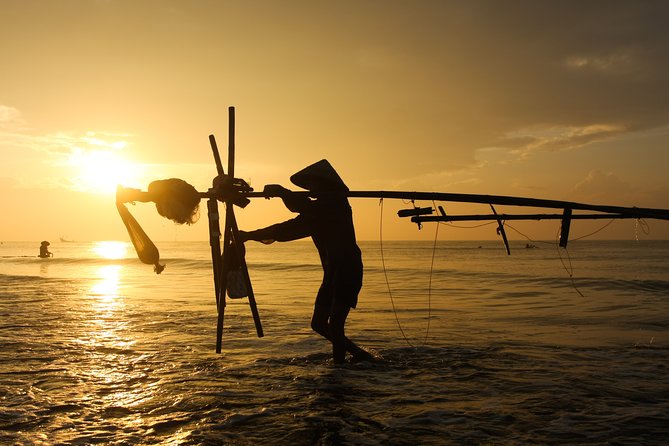
If you want action that’s big enough to feel epic without looking fake, you’ll like the fishing methods here. One group spreads a net that can stretch for several hundred meters. The teamwork is clear: each end is pulled by 10–15 strong people. After hours, the catch is gathered ashore, sorted, and sold.
That scale is a photographer’s gift. The net creates strong leading lines. The labor creates repeating gestures. And the end result gives you a natural “before and after” storyline.
Nearby, you may also see men walking on stilts, scooping small fish from the sea. It’s a quieter kind of effort, but the visual impact is still strong: repeating movements, simple tools, and the constant search for a good haul. Even the hope is part of the story, with the goal around 10 kg or so.
A practical note: stilt fishing scenes come with safety considerations. You don’t need to chase risk to get great images. Give yourself a safe position, use a longer lens if you have one, and focus on faces, hands, and the texture of the work.
These scenes also photograph well in different light. Morning light can show detail and skin tones. Later light can flatten shadows and make compositions cleaner. Either way, the teamwork and scale do much of the heavy lifting for you.
Salt-making and fishing tools: turn chores into photo essays
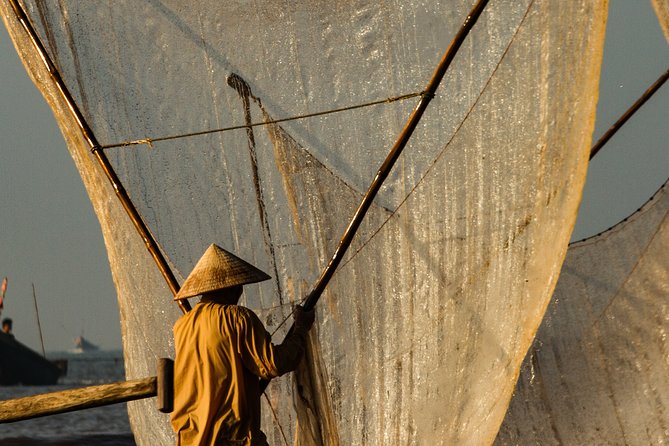
This tour isn’t only about boats and nets. You also photograph the unique fishing tools used by local fishers, and you’ll see and photograph the processes of making salt.
That matters because it expands your story. Fishing is only half the coastal economy. Salt is tied to preservation and daily life around seafood. When you photograph salt-making, you’re documenting a process with its own tools, stages, and routines.
For a photographer, “process” is gold. It means you can shoot steps:
- before setup (tools ready, workspace established)
- active work (hands moving, materials shifting)
- cleanup or transfer (sorting, storing, finishing)
Same idea with fishing tools. Instead of photographing just the moment of capture, you can photograph how people prepare gear, maintain equipment, and use tools that look different from what you’ll see elsewhere.
If you care about composition, salt-making adds great texture. Salt piles, surfaces, and work patterns can create strong visual structure even when people aren’t in full view. And when people are present, their concentration gives you portrait angles without needing to stage anything.
Keep your camera ready and your mind in story mode. You’ll end up with images that feel connected, not random.
Afternoons with boat and net repairs
In the afternoon, the mood shifts from capture and sorting to maintenance. Groups of fisherman gather by the beach to fix ill-equipped boats and torn fishing nets.
This part is underrated for photography. Repairs can look messy, but mess often equals truth. You’ll see tools, hands, and material work—knots, patching, adjustments, and the kind of practical focus that makes portraiture feel honest.
Also, the afternoon works for visual variety. Even if you’ve already shot plenty of morning action, boat repairs add:
- close-up detail
- repetitive hand motions
- faces lit differently than early morning
- a quieter, more intimate pace
You’ll still be on the coast and still surrounded by coastal labor, just with a different emotional tone. That keeps your photo set from feeling like one long burst of the same scene.
Practical tip for shooting repairs: widen slightly for context, then go in for the tool-to-hand moments. Knots and patches can make strong “how it works” images. And if you catch someone looking up briefly, that can become your portrait anchor shot for the whole sequence.



Momentlives logistics: pickup, small group, and accommodation included
The experience is run by Momentlives Photography tours, with a maximum of 6 people. That small size helps a lot in real life. You’re not fighting over space on the beach, and your guide can spend more time helping you find photo angles without the group getting stretched out.
Pickup is offered, and you’ll travel by air-conditioned vehicle. That’s a simple but real comfort factor, especially when your day starts early and you’ll be outdoors for a long stretch.
Accommodation is included too, which matters because it keeps the trip easy. You can focus on shooting instead of solving where to stay, how to eat, and how to coordinate transport between photo stops.
In past communication from people who’ve traveled with Momentlives, the guides and local support are a big part of why the day feels organized and high quality. A name that comes up in that context is Hoa, who appears in the trip story for repeat visitors. Even if you don’t know the guide in advance, you can expect the team to think like photographers: getting you to the right moments and helping you work the scene.
One more thing: a mobile ticket is used, and confirmation is received at booking. That reduces the usual pre-trip stress, which is nice when you’re planning for weather and timing.
Value of $408: what you avoid by not going alone
At $408 per person for about two days, this isn’t the cheapest way to shoot fishing village life. But it’s priced like a guided, logistics-covered photo experience, not a budget transport-only day trip.
Here’s what you get that’s hard to DIY cleanly:
- Air-conditioned vehicle transport
- Accommodation for the trip duration
- All meals included except breakfast on Day 1 and dinner on Day 2
- Coffee and/or tea
- Pickup offered
- A structured photography approach with time from sunrise to sunset and guidance for portraiture, low light, and composition
Going alone sounds tempting until you factor in the real-world hassle: finding the right places when boats come in, getting access to active work areas at the right time, coordinating meals and lodging, and trying to build a photo story without local context.
Where you’ll feel the value most is in the timing and access. Fishing scenes are fleeting, and the best moments often happen before the crowd shows up. This tour is built to put you there when the work is actually happening.
Your best use of the money: show up ready to shoot sequences, not only souvenirs. If you want a photo set with variety (portraits, wide action, details, and process shots), this format pays off.
Should you book this Vietnam fishing village photo tour?
Book it if you want photography that tells a clear story about coastal life—boats landing, catch sorting, net teamwork, stilt fishing, and even salt-making. If you care about portraits, low light, and composition, you’ll get more out of this day than a generic sightseeing route.
Skip it if your idea of a great trip is a low-effort schedule or if you’re not comfortable with standing and walking in coastal conditions. Also, weather matters here. If the day gets canceled for poor weather, you’ll be offered a different date or a full refund, so you’re not stuck.
The sweet spot: photographers and curious travelers who like authenticity more than comfort, and who want their images to show how people actually work.
FAQ
What time does the tour start?
The start time is 8:30 am.
How long is the Vietnam fishing village photography tour?
It lasts about 2 days.
Where is the tour based?
The tour is located in Hanoi, Vietnam, and it includes travel to the coastal fishing village scenes.
Is pickup included?
Pickup is offered.
Is the group size limited?
Yes. The tour has a maximum of 6 travelers.
What’s included in the price?
Air-conditioned vehicle transport, accommodation, and all meals except breakfast on Day 1 and dinner on Day 2 are included. Coffee and/or tea are also included.
Do I get a ticket on my phone?
Yes. A mobile ticket is provided.
What if the weather is bad?
This experience requires good weather. If it’s canceled due to poor weather, you’ll be offered a different date or a full refund.
Can I cancel for a full refund?
Yes. Free cancellation is available up to 24 hours in advance for a full refund.