REVIEW · HANOI
Best Lan Ha Bay Cat Ba Cruise 2 Days 1 Night Less touristy
Book on Viator →Operated by Sunlight Travel & Cruise · Bookable on Viator
Two days in Lan Ha feels like breathing slower. Lan Ha Bay is gorgeous and noticeably calmer than the more famous neighbor, and the guides (Tony, Shin, and Hai show up often) help the day feel smooth and friendly. One thing to plan for: the trip is still bus-heavy, and boat food can be uneven depending on the sailing.
This 2 days / 1 night cruise starts in Hanoi and keeps you mostly on the water and in small island pockets instead of big-city stops. I like that the schedule packs in the bay sights plus real local life with Viet Hai Village, without turning it into a check-list that zips past everything.
Your main trade-off is comfort versus value. You’ll sleep in shared cabins (usually twin/triple), and the cruise boat experience can range from quite comfortable common areas to more basic rooms. If you’re the type who expects a luxury hotel on the water, you might feel underwhelmed.
In This Review
- Key Things I’d Bank On Before You Book
- Why Lan Ha Bay Feels Different on a 2-Day Cruise
- Getting From Hanoi: The Real Deal on the Bus Transfer
- Day 1 on the Water: Lan Ha Bay + Ba Trái Đào Beach Time
- If the Weather Turns Chilly, Don’t Panic
- Cat Ba Island Feeling: Why This Stop Adds Context
- Day 2: Viet Hai Village by Bicycle (and Why It’s More Than a View)
- Food and Drinks on the Cruise: Often Good, Sometimes Not
- Cabins and Comfort: Shared Space, Realistic Expectations
- The Most Praised Part: Crew and Guides Who Keep It Fun
- Price and Value: What $87 Gets You in Real Terms
- Should You Book This Less-Crowded Lan Ha Bay Cruise?
- FAQ
- FAQ
- How long is the cruise?
- What is the price per person?
- What meals are included?
- Are kayaking and biking included?
- Does the cruise include a cabin?
- Is there an extra charge for solo travelers?
- How many travelers are on the cruise?
- Where does the tour start?
- Is the itinerary weather-dependent?
Key Things I’d Bank On Before You Book
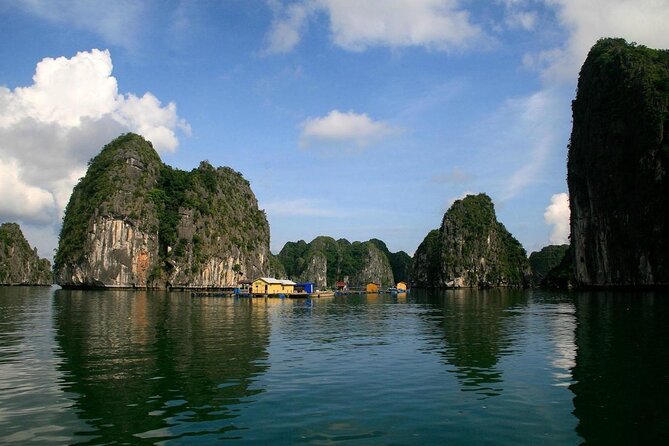
- Lan Ha Bay instead of Halong Bay crowds: fewer boats and a more peaceful vibe across limestone islets.
- Small group size (max 25): less chaos on transfers and on the day’s activities.
- Multiple on-water experiences: swimming, a row-boat cave pass, and chances to explore coves from the water.
- Viet Hai Village with cycling: you trade postcard views for real countryside rhythms.
- A guide who actually runs the show: Tony, Shin, and Hai are repeatedly mentioned for helpful, upbeat guidance.
- Value depends on your expectations: meals and boat comfort are good for most, but quality is not perfectly consistent.
Why Lan Ha Bay Feels Different on a 2-Day Cruise
Lan Ha Bay sits right next to Halong Bay in Northern Vietnam’s same karst world. But it doesn’t feel like the theme-park version of that scenery. Instead, it’s tied to the Cat Ba National Park area and is spread across hundreds of limestone islets. You get the dramatic rock towers and quiet coves, but with a less crowded feel that makes the whole day more relaxing.
That matters because a cruise can be two things: scenery, or crowds. Here, the bay itself is the main event, and the smaller scale makes the sights easier to enjoy. You’ll see floating life and coastal villages from the boat, and you’ll spend meaningful time in the water—enough to swim, enough to row through a cave, enough to feel like you’re moving through the bay instead of sitting in one long slideshow.
The best part is that the day doesn’t stay locked inside “look at rocks.” You go from sailing to beach time (Ba Trái Đào Beach) and then to local inland life on Day 2 (Viet Hai Village). That mix is what turns a standard bay cruise into a trip that feels more complete.
You can also read our reviews of more tours and experiences in Hanoi.
Getting From Hanoi: The Real Deal on the Bus Transfer
Most days start with a bus from Hanoi to the port region. In real-world terms, it’s about a 4-hour ride with at least one stop for breaks. That’s normal in Vietnam—still, it helps to know you’re committing to travel time before you even step on the boat.
The logistics can feel “group-y.” One review described the bus as jam-packed because multiple groups share the same vehicle. When you’re traveling with a larger group operation, you don’t control the route or the timing. Sometimes the handoff is smooth. Sometimes the return can run late.
For example, one sailing had a delay due to a ferry getting stuck at low tide. That’s not something the cruise company can magically fix. It’s simply part of ocean and tidal timing in coastal areas.
My practical advice: treat the transfer as part of the experience. Pack a light layer (buses and boats can be cooler than you expect), bring water, and keep your phone charged for the scenic approach. You’ll be glad you did when the bay views start arriving.
Day 1 on the Water: Lan Ha Bay + Ba Trái Đào Beach Time
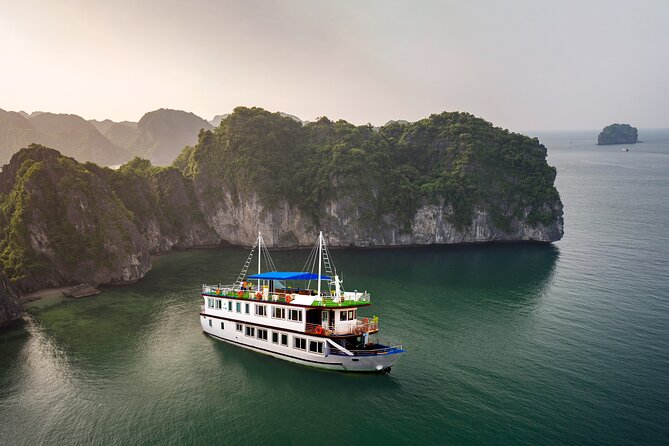
Day 1 is built around getting you out onto Lan Ha Bay early enough to catch the rhythm of the coastline. You’ll spend a lot of time sailing through limestone formations and smaller islet zones. This is one of the reasons people like this route: you’re not just passing by the famous spots—you’re moving through the bay’s calmer sections and getting multiple vantage points.
You also get the kind of activity that makes bay time more memorable than sitting on deck. The cruise commonly includes a chance to row in a smaller boat under a cave into a bay—one of those moments where the karst scenery suddenly feels personal because you’re close to it, not just looking at it from a distance.
Then comes Ba Trái Đào Beach, described as a hidden gem. You get a focused chunk of beach time (about 40 minutes), which is short but useful. It’s enough to swim if conditions are right and enough to relax on white sand while limestone karsts rise around the shore. If you enjoy snorkeling, this is typically the part of the day that scratches that itch thanks to the clear water.
Two things to keep in mind. First, the schedule is tight, so don’t plan a full beach day here like you would on an all-day beach hotel trip. Second, weather can change the “swim and kayak” mood. One review mentioned cold weather led to a different kind of activity choice, which brings me to…
If the Weather Turns Chilly, Don’t Panic
Lan Ha is weather-dependent. The company notes the experience requires good weather, and that matches what you can feel in practice. If it’s unusually cold, some activities like kayaking or longer swim time may be adjusted.
That’s not always a bad thing. One sailing reportedly swapped planned activities for alternatives like visiting a floating fish farm. The vibe may change from sporty to scenic, but you still keep moving through the bay story.
Cat Ba Island Feeling: Why This Stop Adds Context
You’ll also spend time on Cát Bà Island, which is the largest of the Cat Ba archipelago islands. Even if you don’t do a deep “island tour” day, this matters because it explains the setting. You’re not just floating through water; you’re in a region where villages, farms, and daily life tie into the bay system.
This is where the “less touristy” claim starts to make sense. Lan Ha Bay is connected to the broader Cat Ba landscape management area, so your stops often feel more like local routines than staged photo stops.
If you’re trying to experience Vietnam beyond the postcard version, that context is valuable. It gives you something to look at that feels lived-in.


Day 2: Viet Hai Village by Bicycle (and Why It’s More Than a View)
Day 2 focuses on inland scenery at Viet Hai Village. The village is surrounded by high mountains and thick jungle, and reaching it isn’t as simple as strolling from a road. You’ll either take a boat approach or do a longer trek through the jungle area depending on conditions and timing. In practice, what you’re most likely to do on this kind of cruise is cycling.
Cycling here changes the feel of the trip. On a bay cruise, you’re always waiting for the scenery to come to you. On this day, you move through the countryside, slow enough to notice small details but active enough to feel like you earned the views.
The cycling segment is also a strong “local life” bridge. You’re not just seeing karst rocks from the water; you’re seeing how people live with those mountains as part of everyday geography. It’s the kind of stop that stays in your head because it’s not only scenic—it’s practical, human, and grounded.
One review mentioned the cruise ending around 11:30 AM after Viet Hai cycling. That early finish can be a plus: you’re not locked into an all-day “last day of the trip” slump. But it also means you’ll want to keep your next plan flexible.
Food and Drinks on the Cruise: Often Good, Sometimes Not
Let’s talk about meals, because this is where cruise expectations really split.
In the better-experience versions, the boat food gets described as excellent, with variety and proper meals included. The cruise includes breakfast, lunch (2), and dinner. So you’re not paying day-to-day for meals, which helps keep the real cost lower than you might think.
But I’ve also seen the other side. One review called the boat food the only really bad meal experience in Vietnam. That’s a stark complaint, and it suggests quality can vary by sailing, boat, or simply by what you personally consider good food after a long travel day.
My practical takeaway: don’t build your trip around gourmet dining. Do expect decent, filling meals. If you’re picky, bring snacks you like for peace of mind. Also remember that drinks onboard can cost extra. One review mentioned a coke for 50,000 VND. That doesn’t mean you’ll feel ripped off everywhere, but it’s enough to justify bringing a water plan and limiting impulsive purchases.
Cabins and Comfort: Shared Space, Realistic Expectations
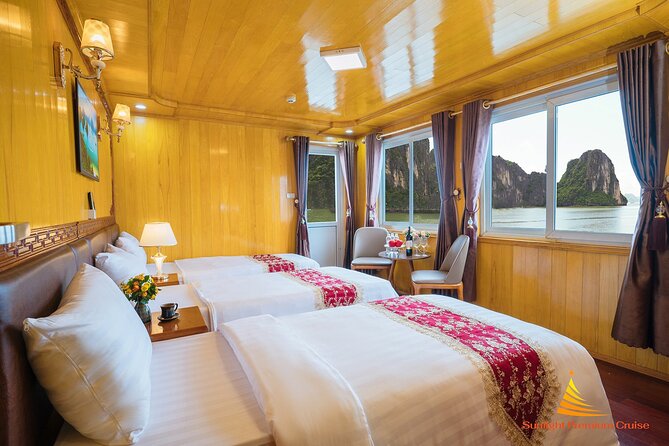
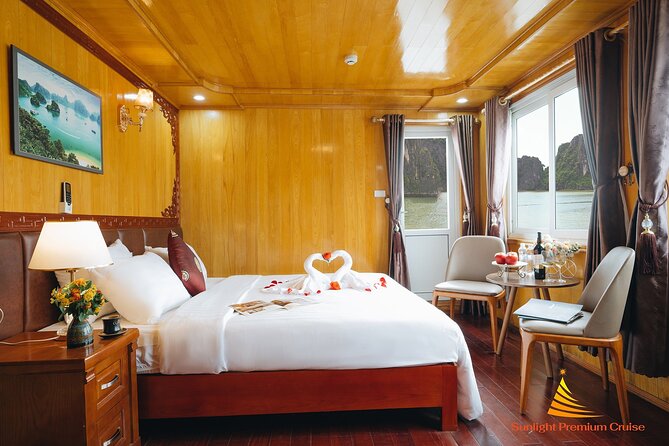
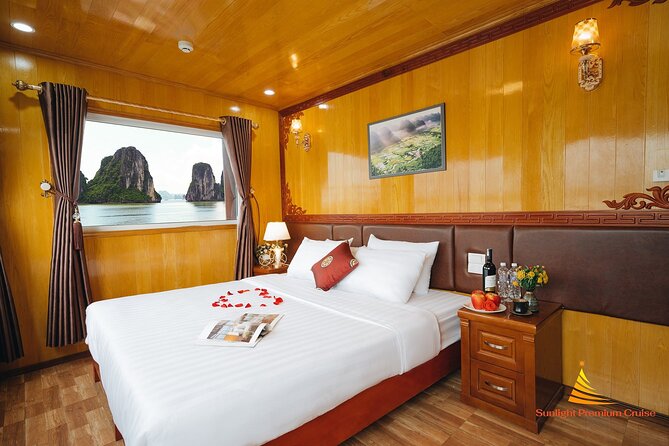
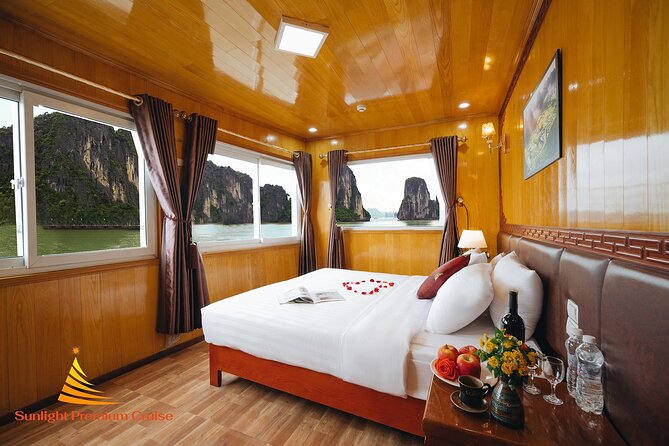
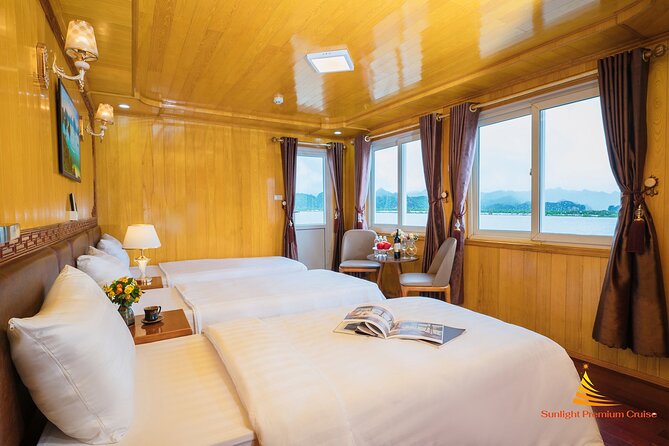
Cabins are typically shared: two or three people per cabin, based on twin or triple setups. If you’re a solo traveler and want your own cabin, there’s a single supplement. The data lists extra costs for premium or boutique cruise categories—premium +45 USD/night and boutique +55 USD/night.
Rooms aren’t marketed as luxury suites. One review described rooms as in good shape but not luxury. That matches what you should expect from a 2-day cruise: the boat is a floating base, not a resort.
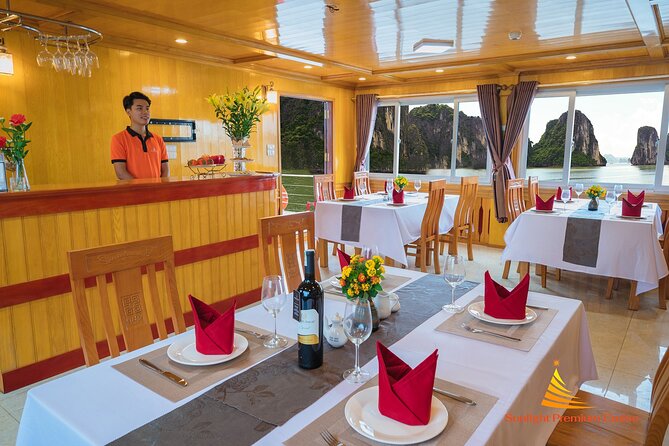
What you can expect reliably is that the common areas matter. One described ship as having indoor dining and a bar area plus an outdoor lounge. You’ll spend most of your “hang time” around those areas rather than in your cabin.
If comfort is a top priority, choose your expectations carefully. If you’re mostly there for scenery, activities, and a guided pace, the shared cabin setup usually feels like a fair trade.
The Most Praised Part: Crew and Guides Who Keep It Fun
This cruise has a strong reputation for staff performance. Multiple guide names come up, including Tony, Shin, and Hai. The consistent theme is not just friendliness, but active management: keeping you informed, making sure activities run, and smoothing the transition between the boat, the beach stop, and the village cycling day.
That’s important because on a bay cruise, timing is everything. When boarding happens late or instructions are vague, your whole day becomes stressful. On this trip, the praised guides keep the flow moving and help you understand what you’re looking at—without turning the day into a lecture.
So even when the food quality is mixed or the weather shifts, the human factor often keeps the overall experience enjoyable. This is one of the reasons the rating is so high in the data you provided.
Price and Value: What $87 Gets You in Real Terms
At $87.06 per person, this is one of those prices that looks low only until you account for what cruises usually cost elsewhere. Here, value comes from three buckets:
- Meals included: breakfast, lunch twice, and dinner reduce daily spending.
- Cabin included (shared): you’re paying for sleeping, not just sightseeing.
- Core activities usually covered: the cruise structure is built around bay time, swimming/cove stops, and guided experiences.
But remember what’s not included. Entrance fees, kayaking, and biking are listed as not included, and extra fees appear in the data (kayaking/biking at 500,000 VND per person; entrance fees also not included). That means the final total can creep up if you do everything.
Also note single supplements add cost if you want a cabin to yourself. If you’re okay sharing, the price is much more attractive. If you want solo privacy, be ready for the added nightly fee.
My rule of thumb: this cruise is a great buy if you’re flexible on activities and you’re happy with shared accommodations. It’s less of a bargain if you need luxury-level comfort and guaranteed top-tier meals every single time.
Should You Book This Less-Crowded Lan Ha Bay Cruise?
If you want an easy 2-day way to see Lan Ha Bay without getting stuck in the heaviest tourist crowds, I think this one is worth considering. The bay itself is the star, and the itinerary supports that star with both water time (swimming and cave-rowing) and land time (Viet Hai cycling).
Book it if:
- you like scenic cruising but also want real activities, not only photo stops
- you’re okay with shared cabins
- you want a guided experience with a crew that has a strong track record
- you’re traveling with friends or you don’t mind cabin sharing if you’re solo
Skip it or choose carefully if:
- you’re very picky about boat food quality
- you expect luxury cabins
- you get stressed by bus timing and potential return delays
FAQ
FAQ
How long is the cruise?
The experience is listed as 2 days and about 1 night.
What is the price per person?
The price provided is $87.06 per person.
What meals are included?
Breakfast, lunch (2), and dinner are included.
Are kayaking and biking included?
No. Kayaking and biking are listed as not included, with an additional fee of 500,000 VND per person.
Does the cruise include a cabin?
Yes, cabins are included with a sharing setup for 2 or 3 people depending on twin or triple arrangements.
Is there an extra charge for solo travelers?
Yes. A single supplement applies, with premium cruise +45 USD/night and boutique cruise +55 USD/night.
How many travelers are on the cruise?
The maximum group size is 25 travelers.
Where does the tour start?
It starts in Hanoi, and transport is near public transportation. The boat transfer involves a bus from Hanoi.
Is the itinerary weather-dependent?
Yes. The experience requires good weather. If canceled due to poor weather, you’ll be offered a different date or a full refund.