REVIEW · HOI AN
Sunrise Photography Tour in Vietnam Fishing Village
Book on Viator →Operated by Hoi An Photo Tour & Workshop · Bookable on Viator
Set your alarm early. This sunrise photo tour sends you about 50 km outside Hoi An to a working fishing village where the morning action is real, not staged.
I love how the small group size keeps things hands-on and lets your guide watch what you’re doing right in the chaos.
One thing to weigh: you’re starting around 4:00 AM, so it’s not a relaxed holiday morning unless you’re naturally awake early.
In This Review
- Key highlights you’ll feel right away
- Why this sunrise photo run is special beyond the usual Hoi An routine
- The 4:00 AM start: light, energy, and what you’ll actually photograph
- Composition first: what the coaching is (and isn’t) doing for you
- Entering the harbor chaos: where your best photos come from
- Small-group value at $270: what you’re really paying for
- How to prepare so your sunrise photos don’t feel like a guessing game
- The practical flow of your morning (and where it can feel tricky)
- Who this tour fits best (and who should consider a different option)
- Should you book the Sunrise Photography Tour in this Hoi An fishing village?
Key highlights you’ll feel right away
- Working fishing village energy at sunrise with boats coming in and people busy doing real jobs
- Composition-focused coaching before you shoot, not a deep lecture on settings
- Works for serious cameras and everyday phones, including iPhones
- Max 3 people, so you get feedback instead of floating through a crowd
- A guide with local access and rapport, which helps you photograph fishermen respectfully and close
- Light changes fast, so you’ll practice seeing and framing quickly
Why this sunrise photo run is special beyond the usual Hoi An routine
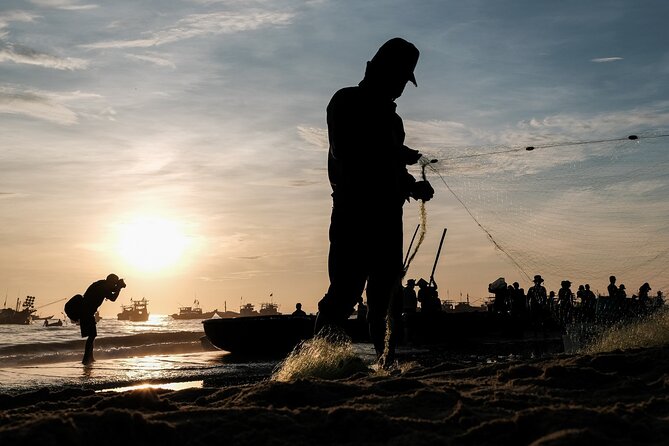
Hoi An is famous for lanterns and pretty streets. This tour takes you somewhere totally different: the working harbor world just outside town. You drive roughly 45 minutes to reach the fishing village about 50 km away, and that travel time matters. It buys you a calmer moment to talk about how to see the scene before the crowds and motion kick in.
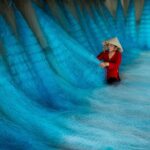
The “best village outside Hoi An” claim is the point here. You’re not just photographing a pretty coastline. You’re photographing an ecosystem of work: boats arriving, fish activity picking up, people moving with purpose, and the way early light slices through everything. It’s visual stress in the best way, because it forces better composition fast.
And because the group is capped at three, you’re not competing for attention. Your guide can help you correct your framing on the spot—especially useful when the subject keeps changing every few seconds.
You can also read our reviews of more tours and experiences in Hoi An.

The 4:00 AM start: light, energy, and what you’ll actually photograph
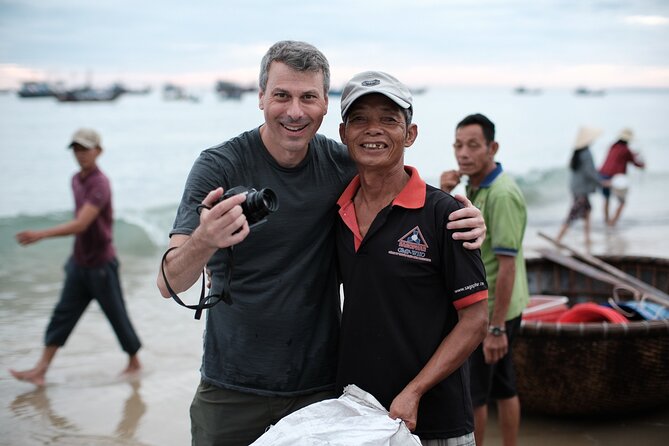
Your morning runs during hours that start at 4:00 AM (with the activity window open until 10:00 AM). Plan for an early pickup if that option is offered for your booking, because the experience is built around being there for sunrise activity.
In practical terms, low-light photography can feel risky. The good news is that this tour is designed for that exact situation. You’ll be shooting in conditions where the light is dim at first, then quickly ramps up—colors shift, shadows shorten, and people move from quiet prep into full market rhythm.
That fast change shows up in the best kind of photo results: you get sequences of the same scene with different moods. One minute the harbor looks cool and misty; the next it’s warmer, brighter, and more contrasty. The guide’s composition prompts help you keep your eye sharp even when the market is chaotic.
Subjects you can expect to focus on include:
- Fishermen and workers handling gear and preparing for the day
- Boats and arrivals as the morning picks up
- Market action where the scene feels busy and layered
- Details like hands, tools, and movement patterns (often easier to photograph than you’d think)
If you’re the type who likes street photography energy, this fits. It’s not just about sunrise as a backdrop. It’s about sunrise as the trigger for real work.
Composition first: what the coaching is (and isn’t) doing for you
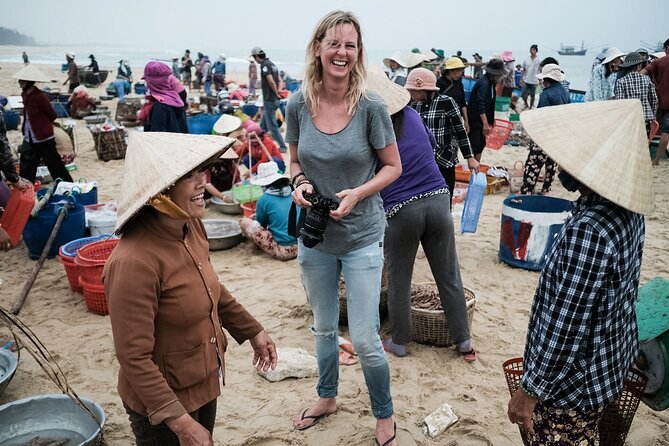
This tour is aimed at photographers who already understand their camera and basics of composition. That sounds like “no help,” but it’s actually a smart focus. You don’t waste time on technical settings during the session. Instead, you use the drive time for guidance on how to frame and see.
So you’ll get help with things like:
- How to choose a viewpoint when the scene is busy
- How to build a strong shot even with moving subjects
- How to simplify clutter in a location full of activity
- How to use angle changes to create variety from similar moments
The “advanced composition techniques” angle matters because fishing village scenes can overwhelm your brain. There are people everywhere. Gear everywhere. Motion everywhere. Composition coaching helps you stop treating it like a snapshot mission and start treating it like a deliberate visual story.
Phone users aren’t left out here either. One of the strongest pieces of feedback was that people loved the results even with an iPhone. That tells you something important: the guide’s approach isn’t only for people with big cameras. If you can frame and sequence, you can make strong images.
If you’re rusty on camera basics, bring what you know and plan to rely more on composition prompts than technical problem-solving. This isn’t the right moment to learn your camera’s exposure settings from scratch.
Entering the harbor chaos: where your best photos come from
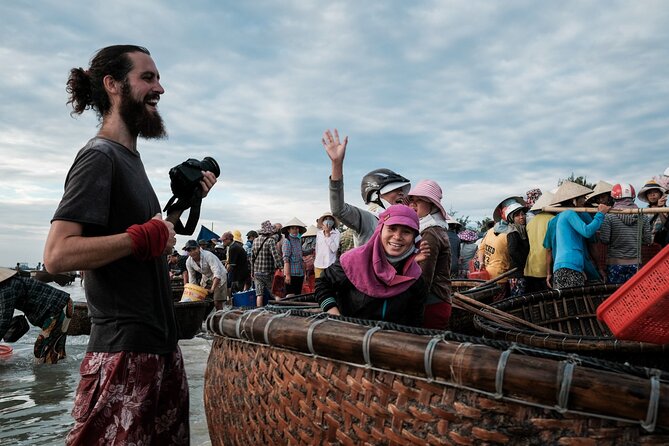
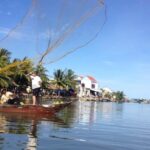
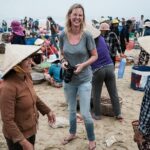
The fishing market is the main stage, and it’s busy when you arrive. Boats come in, people start working, and the scene becomes a visual puzzle. That’s why the tour feels intense in the best way: you learn to work with motion rather than wait for perfect stillness.
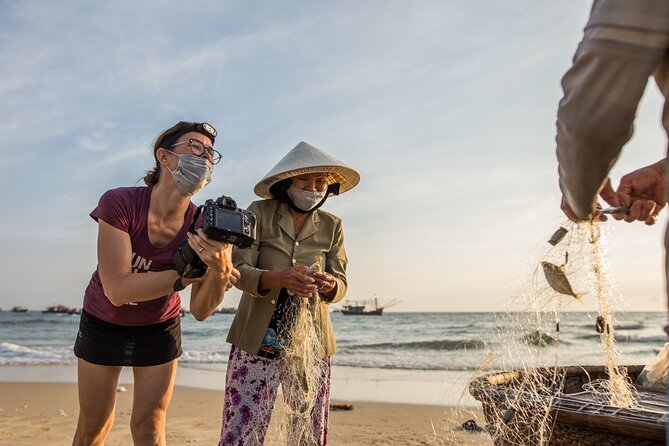
A key advantage is the guide’s local rapport. You’re not walking in like random tourists with cameras. There’s a sense that the instructor knows how to approach fishermen respectfully, which makes people more open to being photographed—even up close. That changes everything for photos. You get expressions, interactions, and human details that are hard to capture when everyone is guarded.
You’ll also practice different ways to shoot the same area. In feedback, guests called out learning to use different angles and thinking outside the box. That usually means you stop shooting only from standing eye level and start looking for:
- foreground elements to anchor the frame
- pathways that lead the eye toward boats or faces
- close details when the wider scene gets too busy
- diagonals and layered depth created by people and gear
Low light can feel limiting. But it also helps. Dim conditions reduce the harshness of midday glare, and the harbor often has color shifts that look great in photos. The light changing every minute is part of the course: you keep adjusting your framing and moving with the moment.
Small-group value at $270: what you’re really paying for
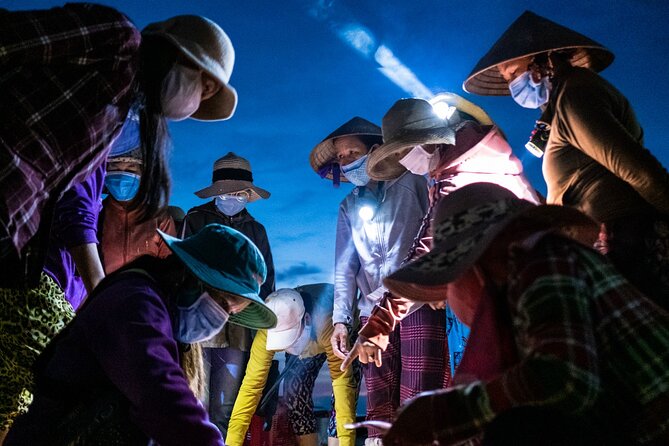
At $270 per person for about 5 hours, this isn’t a bargain tour in the usual sense. But it can be good value if you care about results more than ticking off a location.
Here’s what you’re paying for:
- Access to a working village about 50 km from Hoi An at the exact moment action starts
- A small maximum group (up to 3 travelers)
- Composition coaching timed for when you’ll need it
- Pickup offered (when included), which saves you from figuring out an early-morning route
- Mobile ticket for easier entry and fewer day-of headaches
The booking pattern—around 152 days in advance on average—also hints at demand. Sunrise sessions are limited by nature and timing, so spots don’t hang around.
Is it worth it for every traveler? Not necessarily. If your goal is casual sightseeing with a camera tucked away, you might feel rushed by the early start and the focus on advanced composition. If your goal is to come home with stronger frames and you enjoy active mornings, this is the kind of session that justifies the price.



How to prepare so your sunrise photos don’t feel like a guessing game
Because technical camera settings aren’t the main focus, your best move is to arrive ready. You don’t need to be a pro, but you should know your device well enough that you can concentrate on framing.
Before the tour, I’d do three practical things:
- Charge everything and clear storage so you can shoot without panic
- Know your basic controls (focus method, how to adjust exposure quickly, and what you’re using for low light)
- Pick a “go-to” lens or focal length (or stick with a phone’s familiar mode) so you aren’t switching tools constantly
What to wear matters more than you might think. You’ll be working in the morning with people moving around and light that’s changing quickly. Comfortable shoes are a must. Also think about keeping a light layer for early hours.
If you’re using a phone, you’ll still benefit from the composition prompts. The guide’s philosophy seems to translate well: framing choices and clean angles matter whether you’re using a big camera or a Max Pro–style handset.
The practical flow of your morning (and where it can feel tricky)
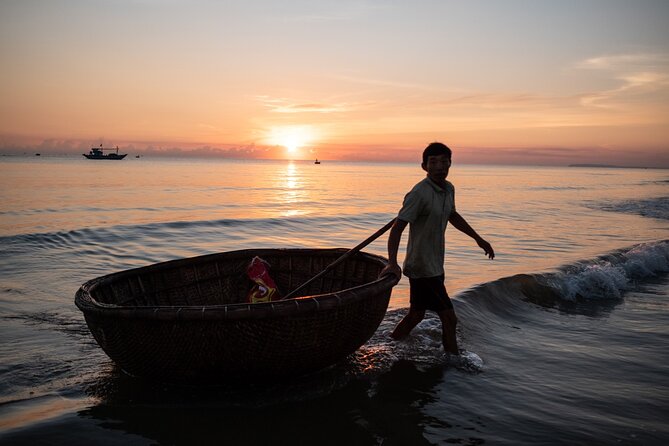
This tour runs close to sunrise and lasts about 5 hours. Here’s what that usually means for the experience rhythm:
1) Early start and pickup (if included)
You begin in the dark and move toward the village. This is where you should mentally switch from sightseeing mode to photographer mode.
2) Drive-time composition talk
Because you’re traveling about 45 minutes, the guide uses that quiet window for composition guidance. This is when you get the “how to see it” part.
3) Arrival and shooting while the market is active
Once you’re there, it’s fast. Boats, workers, movement, light shifts. You’ll likely shoot in short bursts, then reposition for better angles.
4) Hands-on direction as you frame
With a max group size of three, you get more direct feedback than you would on larger tours. The guide can point out what to change immediately.
5) Wrap up and return
After the main sunrise activity window, you’ll finish and head back, keeping the whole morning efficient.
Where can it feel tricky? The early wake-up is the obvious one. The other is mental: if you expect a slow photo stroll, the harbor’s pace will feel intense. But that intensity is also the reason the photos can look so alive.
Who this tour fits best (and who should consider a different option)
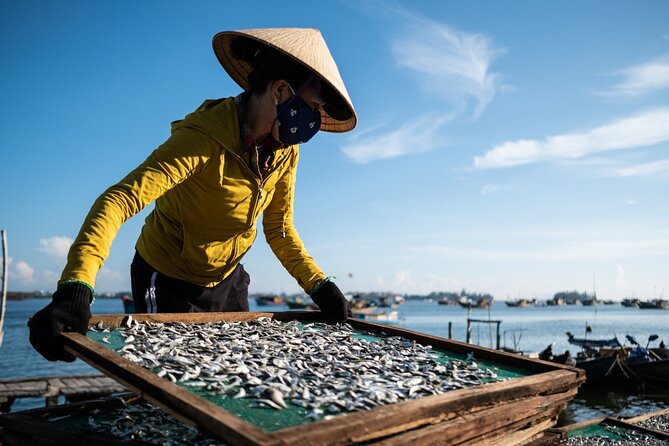
I’d point you toward this tour if you:
- already understand your camera basics and want better composition
- enjoy photographing people and real work, not only scenery
- want smartphone-friendly guidance that still leads to strong results
- like being in a small group where you’re not ignored
I’d also say it’s worth considering even if you’re not a camera wizard, because some participants highlighted learning a lot on iPhones and getting practical value quickly. Just don’t expect the session to slow down for beginner technical instruction.
You might want a different kind of tour if you:
- want a relaxed morning with minimal instructions
- are hoping for a deep camera settings lesson
- hate very early starts or struggle with 4:00 AM wake-ups
Should you book the Sunrise Photography Tour in this Hoi An fishing village?
If your main goal is photos with stronger framing, better angles, and a real working-village subject at the most photogenic time of day, I think this is a solid choice. The combination of sunrise timing, small-group attention, and composition-first coaching is what makes it click.
Book it if:
- you’re comfortable getting up early
- you can focus on seeing and composing more than troubleshooting camera settings
- you want an experience with access and rapport, not just random snapshots
Skip it if:
- you want a relaxed, no-pressure morning
- you need a full beginner lesson on camera operation
- you’re likely to resent the early schedule no matter what
If weather is poor, the experience can be canceled and you’ll be offered a different date or a refund. That’s not a flaw; sunrise depends on conditions, and this tour is built around that reality.
If you’re the kind of traveler who loves a challenge and comes alive with early light, you’ll likely love this one.