REVIEW · HOI AN
Hoi An Eco Tour Cooking Class & Fishing (Local market,basket boat,learn cooking)
Book on Viator →Operated by Hoi An Eco Tour and Papa's Cooking Class · Bookable on Viator
Coconut forests and curry in one morning. This small-group Hoi An eco tour strings together a local market ingredient hunt and traditional basket-boat fishing, then finishes with a two-hour Vietnamese cooking class. I like that it’s actively hands-on, not just sightseeing with a guide talking at you.
What I also like: you get real personal attention (max 10 people) and a full meal that you help make. One drawback to keep in mind is that there aren’t takeaway recipes included, so if you want to cook the dishes later, plan to take notes during class.
In This Review
- Market Morning: Handpicking Ingredients for Your Class
- Bay Mau Coconut Forest and the Nipa Basket-Boat Ride
- Fishing from Bamboo Basket Boats: Nets, Crabs, and River Rhythm
- The Two-Hour Cooking Class With an English-Speaking Chef Guide
- Lunch on Your Schedule: What You Eat and How It Feels
- Price, Transfers, and Group Size: Real Value for $29
- Should You Book This Hoi An Eco Tour?
- FAQ
- How long is the Hoi An Eco Tour Cooking Class & Fishing?
- Is pickup and drop-off included?
- Is there an extra fee for pickup from Da Nang?
- Do you visit the coconut forest, and is a boat ride included?
- What fishing activities are included, and do you get safety gear?
- What’s included with the cooking class?
- How many people are in the group?
- What happens if I need to cancel or the weather is bad?
Market Morning: Handpicking Ingredients for Your Class
Your day starts with pickup from your hotel in Hoi An, typically around 8:30 AM. If you’re staying in central Hoi An, this part is easy: you don’t need to solve transport or meeting points. The tour keeps the group small—up to 10 travelers—so the guide can actually talk with you while you shop.
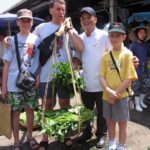
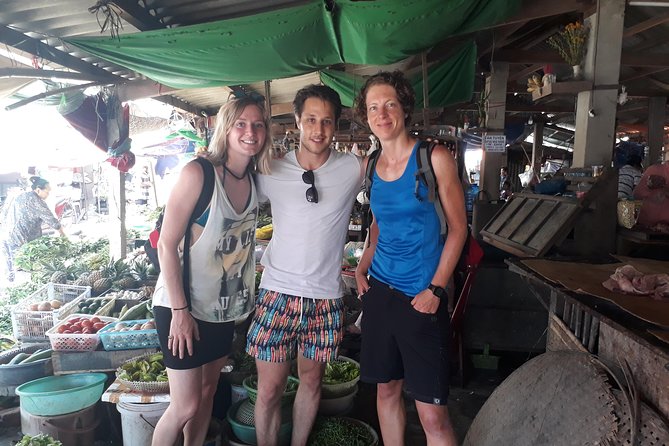
The first stop is the local market, and that’s where the experience earns its keep. You’re not just walking past stalls. You’re learning ingredients one by one, with an English-speaking chef guide. Expect to look at the stuff Vietnamese cooks reach for all the time—fresh herbs, aromatics, sauces, and produce that show up in everyday dishes.
This market segment matters for two reasons. First, it helps you understand Vietnamese cooking as technique plus balance, not just a list of ingredients. Second, it sets you up to cook with confidence later, because you already touched and tasted the raw materials during the shopping phase. One guest noted how enjoyable the market storytelling was with Mr Tran, and that’s the kind of “local knowledge” you’re paying for with this style of tour.
Practical tip: wear shoes you can get dirty. Markets are busy, floors can be uneven, and you’ll be moving at a normal walking pace rather than a slow museum stroll.
Bay Mau Coconut Forest and the Nipa Basket-Boat Ride
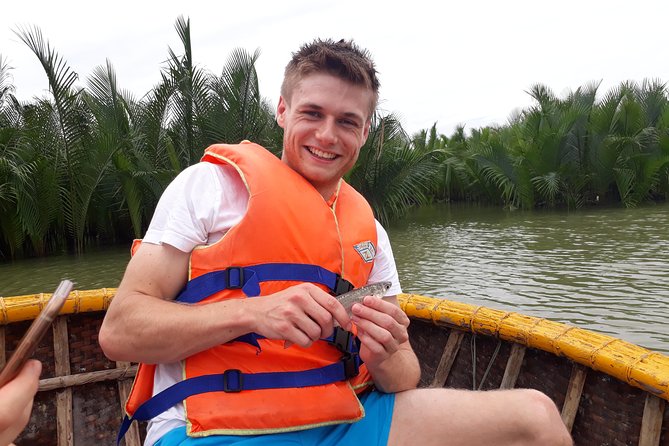
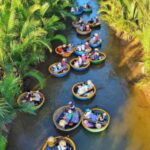
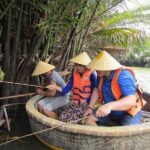
After the market, you head to Bay Mau Coconut Forest, where the tour leans into the “eco” part of Hoi An eco cooking. The main feature here is a basket-boat ride through the nipa (water coconut) forest.
This section is simple but memorable: you explore the waterways, you see how nipa grows and functions in this region, and you get a change of pace from the market bustle. You’re provided with safety and weather gear, including a life jacket. The tour also includes an umbrella and raincoat, which can save your day if the sky does what it does in central Vietnam.
What you should expect from the coconut-forest time: it’s more visual and hands-on than academic. Some people prefer a longer, deeper explanation about the trees and their uses. If you’re coming mainly for the scenery and the boat experience, you’ll probably be happy. If you want a full biology lecture, you might wish for more time.
One of the strengths of this whole tour format is contrast. You go from crowded market tables to quiet water channels. That contrast makes the cooking class feel more meaningful when you finally get to the restaurant, because you’ve already seen the ingredients’ world.
You can also read our reviews of more tours and experiences in Hoi An.
Fishing from Bamboo Basket Boats: Nets, Crabs, and River Rhythm
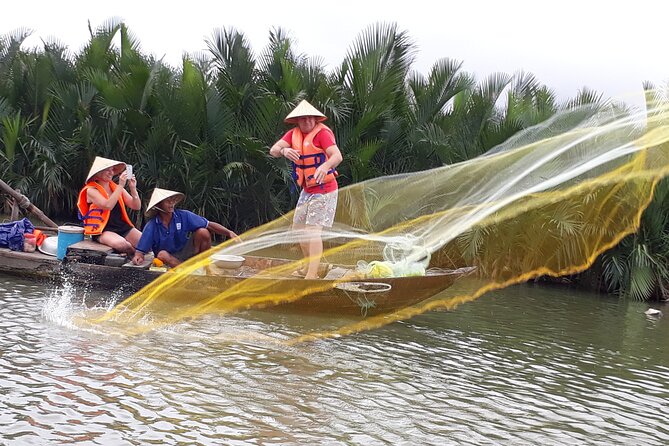
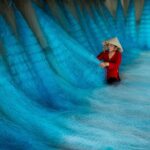
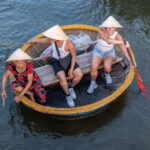
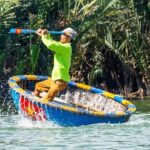
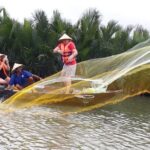
Fishing is where the tour becomes more than a cooking class. You’ll go out on the river and try traditional techniques using a bamboo basket boat—often described as a unique Vietnamese fishing style. You’re not just watching; you’ll get hands-on practice with net work and local methods.
The experience includes learning how to paddle and fish from the basket boat while you move through the water coconut/palm area. The idea is that you’ll feel what locals do: the small adjustments, the timing, and the patience. In the best moments, you catch fish yourself—fresh, from the water—and that instantly changes how you think about the meal you’re about to cook.
There’s also crab fishing. You might get a feel for what “real fishing” means in this setting: not guaranteed success, but active effort and learning by doing. One nice detail: life jackets are part of the package, so you’re not out there improvising safety.
Two practical considerations:
- The basket-boat can be playful. Some people end up more focused on entertainment than fishing practice, including singing or karaoke-like fun. You can still concentrate on catching—just be aware the vibe may vary by departure.
- Bring small cash in case you want to tip the boat operator or those helping with the fishing/paddling. A few guests mentioned tipping as part of the experience, especially when boat handling or fishing effort is involved.
The Two-Hour Cooking Class With an English-Speaking Chef Guide
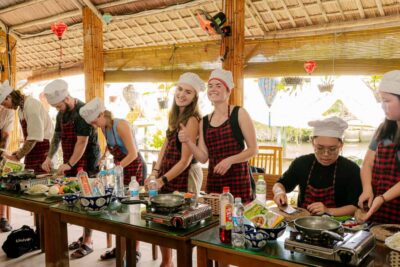
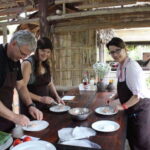
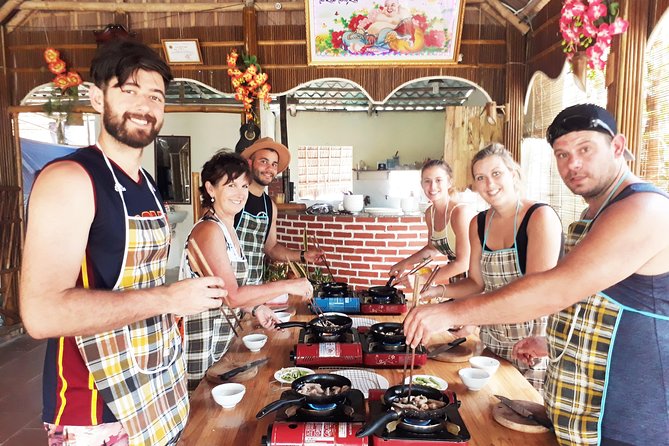
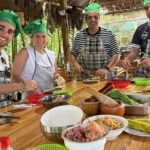
Once you’re back on land, you get welcomed at the restaurant with local greeting drinks. Then the tour shifts into its main event: a two-hour Vietnamese cooking class with an English-speaking guide/chef.
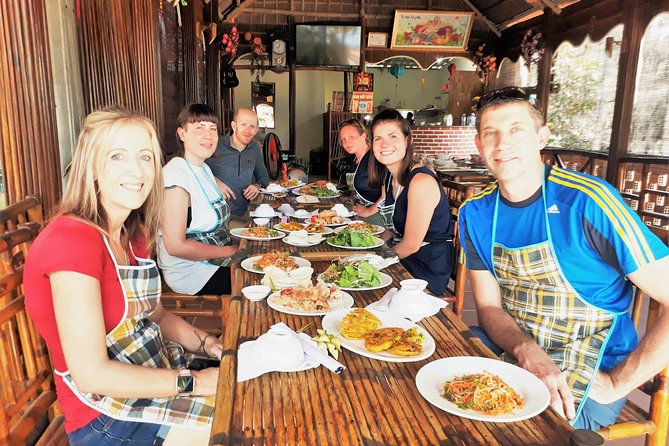
This is a family-style learning setup. You cook as part of the group, and the chef teaches traditional Vietnamese dishes using the ingredients you collected earlier. In other words, your shopping trip isn’t a souvenir detour—it directly feeds what ends up on your cutting board.
The teaching style tends to be practical. You’ll learn the steps you can repeat at home: how ingredients are combined, how flavors are balanced, and how Vietnamese cooking techniques produce that familiar taste profile. And because you’re cooking what you buy, you get instant context. For example, when the chef uses a specific herb or sauce, you already know how that ingredient looks and smells at the market.
The biggest “prep” you need here is mental, not culinary. Go in ready to ask questions. If you’re unsure about substitutions, ask. If you’re curious about what makes one sauce work with another dish, ask again. With a small group, it’s easier for the chef to answer clearly.
One note that matters for home cooks: printed recipe sheets aren’t included. That doesn’t mean you can’t recreate the dishes, but it does mean you’ll want a plan to remember details. Bring your phone for photos and take quick notes on what you added, when.
Lunch on Your Schedule: What You Eat and How It Feels
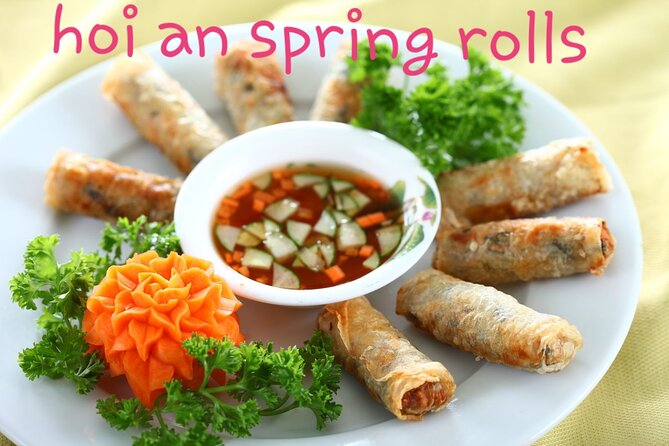
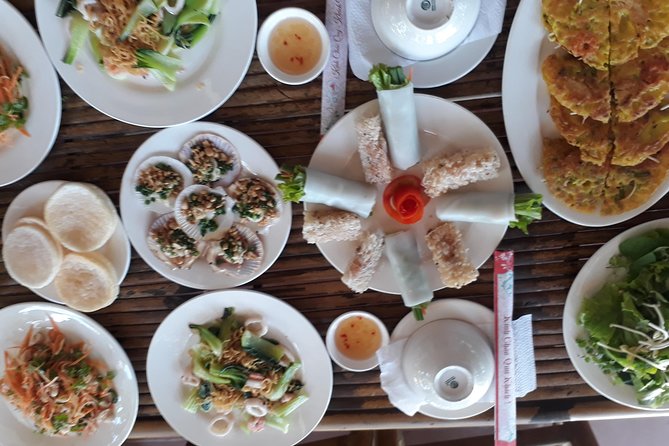
After fishing, then cooking, you’ll want food that feels earned. This tour delivers that: you enjoy lunch or dinner based on your departure, and it’s what you prepare during the class. You’re not limited to small tasting portions. Meals tend to be generous because it’s tied to the cooking you do.
You also get Vietnamese tea and a water bottle included, plus refreshments during the day. That helps a lot when you’ve been on the river—hydration is not optional in central Vietnam heat.
Timing is built into the experience. The classic flow is: market in the morning, fishing and basket-boat time, then the cooking class. If you start around 8:30 AM, you’re typically back at your hotel around 1:00 PM. If you take a later departure, the shape of the day should be the same: shop, fish, cook, eat, return.
What makes the meal special isn’t only taste. It’s the sequence:
1) You learn ingredients in the market
2) You see the environment that produces local food culture
3) You cook with that context
That’s the value of combining rural life with cooking. You finish the day with a stronger feel for Vietnamese flavors than you’d get from a kitchen-only class.
Price, Transfers, and Group Size: Real Value for $29
At $29 per person for a half-day, this tour offers unusually solid value—mainly because it bundles multiple experiences that are often priced separately: market shopping, coconut-forest boat time, river fishing practice, and a full cooking class with your own meal.
Your transfer situation is also a big part of the value. Pickup and drop-off are included from accommodations in Hoi An. If you’re staying in Da Nang, you pay extra: $15 per person for private-car pickup and drop-off. So if you’re based in Hoi An, you keep the budget tight. If you’re in Da Nang, you should factor that extra cost before comparing prices.
Group size matters here too. With a maximum of 10 travelers, the tour avoids the “walk fast, watch later” feeling that happens on big-group tours. You have room to ask questions at the market and during cooking. Fishing instruction can also be more direct with fewer people crowding the boat.
The tour includes gear and key inclusions like:
- Basket boat to explore the nipa forest
- Life jacket and rain gear
- Ticket for the coconut forest visit
- An English-speaking guide (chef)
One more practical detail: the tour requires good weather. If the sky doesn’t cooperate, you’ll be offered a different date or a full refund. So if you’re planning multiple activities, keep a little flexibility in your schedule.
Should You Book This Hoi An Eco Tour?
Book it if you want a hands-on morning that blends food and rural life. This works best for you if you:
- want to shop with a guide and learn why ingredients matter
- prefer doing to watching (market, fishing, cooking)
- like small groups and personal attention
- are happy to bring a phone and notes since recipes aren’t included
Skip it or adjust expectations if your main goal is deep information about the coconut trees or a classroom-style lecture. This is more “experience-based” than “textbook-based.” Also, if you hate any chance of getting wet or muddy, plan carefully—rain gear is included, but you should still expect river and boat conditions.
If you’re staying in Hoi An, the included transfers make the math easier, and the $29 price feels fair for a full sequence of activities. For many visitors, it ends up being one of the most memorable ways to connect Hoi An’s food culture to the environment that feeds it.
FAQ
How long is the Hoi An Eco Tour Cooking Class & Fishing?
It runs about 4 hours 30 minutes (approx.).
Is pickup and drop-off included?
Yes. The tour includes pickup and drop-off at your accommodation in Hoi An.
Is there an extra fee for pickup from Da Nang?
Yes. If pickup is from Da Nang, there is an extra charge of $15 USD per person for pick-up and drop-off by private car.
Do you visit the coconut forest, and is a boat ride included?
Yes. You’ll visit Bay Mau Coconut Forest, and a basket boat ride is included to explore the nipa (water coconut) forest.
What fishing activities are included, and do you get safety gear?
You’ll fish using traditional techniques from a basket boat, including catching fish and crab. A life jacket is included, along with an umbrella and raincoat.
What’s included with the cooking class?
You get an English-speaking guide/chef and a two-hour cooking class, plus lunch or dinner. You eat what you cook, and Vietnamese tea and a water bottle are included.
How many people are in the group?
The tour has a maximum of 10 travelers.
What happens if I need to cancel or the weather is bad?
You can cancel for free up to 24 hours in advance for a full refund. If it’s canceled due to poor weather, you’ll be offered a different date or a full refund.