REVIEW · HO CHI MINH CITY
New Mekong Delta Nature 1Day: Bicycle-Kayak-Canoe & Fishing
Book on GetYourGuide →Operated by VIP MEKONG DELTA TOUR · Bookable on GetYourGuide
A Mekong day resets your whole pace. You’ll trade Ho Chi Minh traffic for bicycling through rice country and a visit to Xom Trau Pagoda’s underground tunnel relic. It’s built around local life more than photo stops, from hands-on river time to a cooking class that actually teaches you how the food comes together.
I also like the format: a small group capped at 12 keeps things calm and gives your English-speaking guide time to explain what you’re seeing. The only real downside is the time commitment—expect an 8–9 hour day with an early pickup and the ride out to the delta (about 1 hour 15 minutes each way). If you want a relaxed half-day, this one may feel full.
In This Review
- Key things that make this Mekong Delta day feel different
- From Ho Chi Minh City to the delta: the ride you’ll plan around
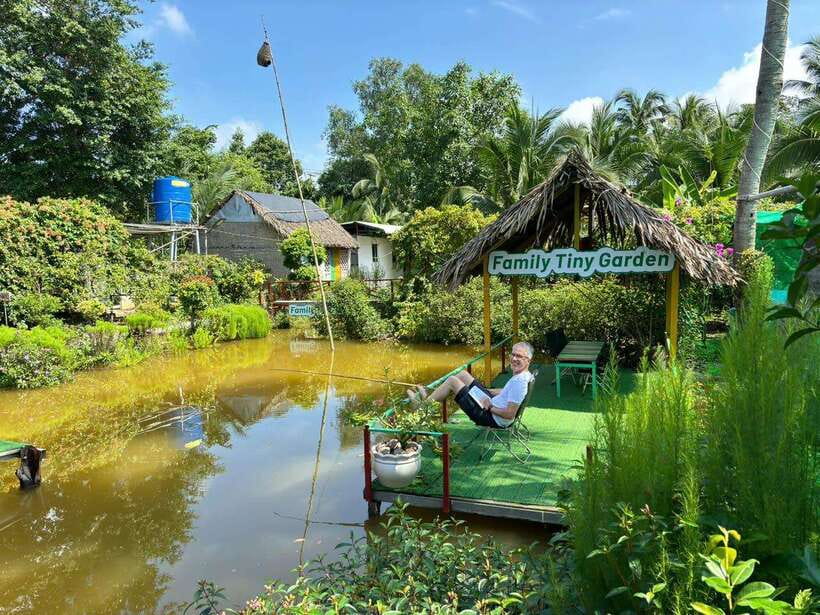
- Family Tiny Garden: where the day starts with local rhythm
- Cycling rice fields and stopping at Xom Trau Pagoda’s underground tunnel relic
- Rice planting, catching fish, and what it teaches you
- Cooking class lunch: spring rolls and banh xèo made in real time
- Canoe boat time and the fruit orchards: lemon, guava, and dragon fruit
- Kayaking through the coconut water forest: calmer paddling at the end
- Price and value: is $39 a smart deal for this schedule?
- Who should book this day trip (and who should skip it)
- Should you book New Mekong Delta Nature 1Day: Bicycle-Kayak-Canoe & Fishing?
- FAQ
- How long is the Mekong Delta Nature day trip?
- Where do you get picked up in Ho Chi Minh City?
- What activities are included during the day?
- What dishes are included in the lunch from the cooking class?
- What language is the guide?
- Is the group small?
- Is transportation included?
Key things that make this Mekong Delta day feel different
- Xom Trau Pagoda underground tunnel relic: history you can walk into, not just read about
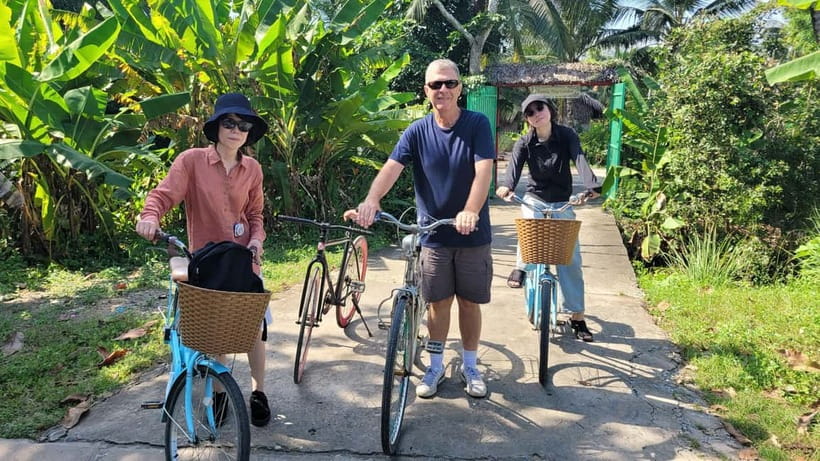
- Bicycle time in rice fields and fruit farms: moving at local speed, not tour-bus speed
- Rice planting and catching fish: you get involved, not just watch from the sidelines
- Spring rolls + banh xeo cooking class: two classic dishes made with guidance
- Canoe boat orchard cruising: lemon, guava, and dragon fruit gardens during fruit-season vibes
- Kayaking through the coconut water forest: quieter paddling after the busier morning
From Ho Chi Minh City to the delta: the ride you’ll plan around
This is a true day trip. You’ll be picked up from a hotel in District 1 around 7:40–7:50 am, then you head out by comfortable, air-conditioned vehicle (modern A/C is included). The transfer takes about 1 hour 15 minutes each way, so yes, you feel the road time—but you also get the payoff of being far enough out to shift gears from city life.
On the way, your guide shares cultural, historical, and ecological context about the Mekong Delta and the activities ahead. That matters because the day isn’t random. When you later see rice fields, tunnels, fruit orchards, and the river scenes, you understand how each piece fits together—farming, waterways, and daily life.
Two small practical notes: you’ll start early, and you’ll be active. This tour includes cycling, catching fish, canoeing, and kayaking, so it’s best if you’re the type who likes doing rather than just observing.
You can also read our reviews of more tours and experiences in Ho Chi Minh City.
Family Tiny Garden: where the day starts with local rhythm
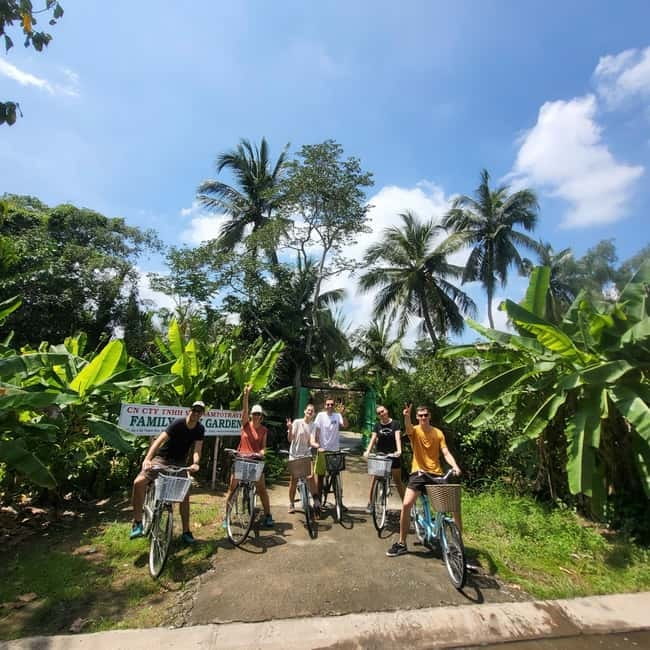
Your morning begins around 9:00 am at Family Tiny Garden. This is the kind of place that sets expectations fast: the focus is on slow, simple work and how people live around the land and water. From there, the program moves into cycling and field activities, so you’re not waiting around in a lobby for the fun to start.
The tour also leans into conversation and community. The idea is that you’ll connect with local households and share stories so the day feels human, not scripted. The tour description also emphasizes that during the trip there aren’t typical tourist crowds, so you’re more likely to feel like you’re visiting local life rather than threading through a busy attraction.
If you’re hoping for a Mekong Delta day that feels more like learning how things are grown and used, this start makes sense. It frames the rest of your day as practical knowledge—what people do, why they do it, and how the river supports it.
Cycling rice fields and stopping at Xom Trau Pagoda’s underground tunnel relic
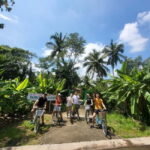
Sometime around 9:30 am, you’ll switch to a bicycle and ride through the countryside. This is one of the best parts for me because cycling changes how you see things. You notice the detail: rice paddies, fruit growth patterns, and the overall layout of the farmland. You’re traveling close enough to feel the place rather than just watching it from a distance.
This is also where you’ll visit Xom Trau Pagoda, which includes the underground tunnel entrance fee. The highlight here is the underground tunnel relic. It’s not just a building you pass by. You get a chance to experience a physical piece of local history—something tied to the region’s past and the need for protection and survival.
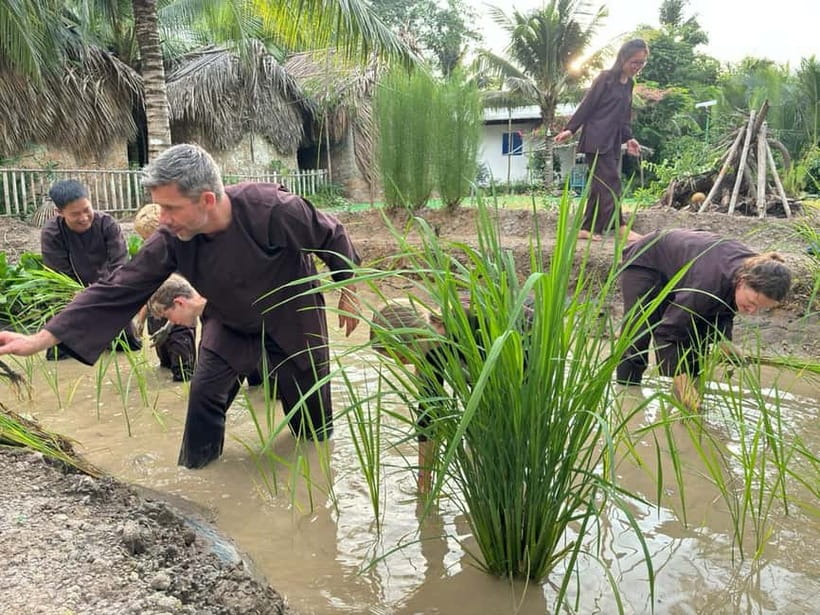
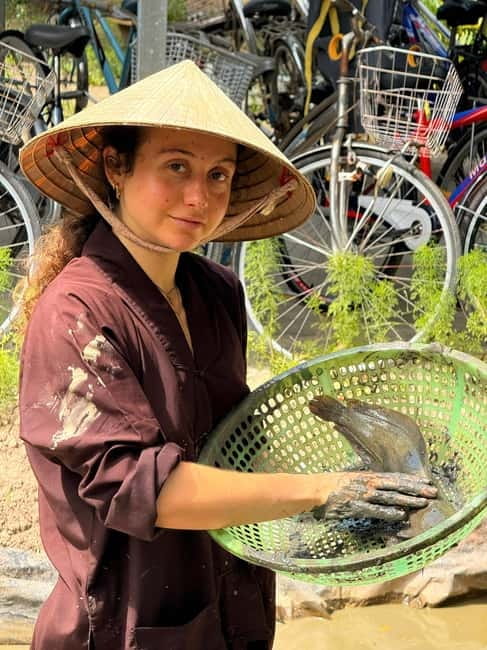
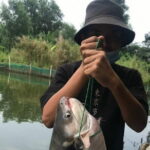
After the pagoda visit, the tour turns hands-on again with rice planting and catching fish. That segment is important: it’s one thing to see rice. It’s another to understand the effort behind it. And catching fish gives you a clearer picture of how everyday food and river life connect.
Two considerations: (1) this part is active, so wear shoes you’re comfortable in for field work, and (2) if you dislike hands-on activities, you might find the fish and planting portions a bit intense. But if you’re game, it’s the most memorable way to understand how the delta feeds itself.
Rice planting, catching fish, and what it teaches you
This is the part many “Mekong views” tours skip. Here, you actually participate in farm work and fishing. Even if you only do a limited amount, you’ll walk away with a better sense of how much labor supports the rice cycle and the daily rhythms of the river.
The guide also explains the process of growing and caring for natural fruits—how it supports sustainable economic development for rural people. That “why” matters. It changes how you interpret the orchards later. Instead of thinking of fruit as just something you eat, you see it as part of a working system.
The fishing activity adds another layer. The delta isn’t just scenic. It’s practical—food, livelihoods, and water management all tied together. Once you’ve done a little of that work yourself, the rest of the day feels more grounded.
Cooking class lunch: spring rolls and banh xèo made in real time
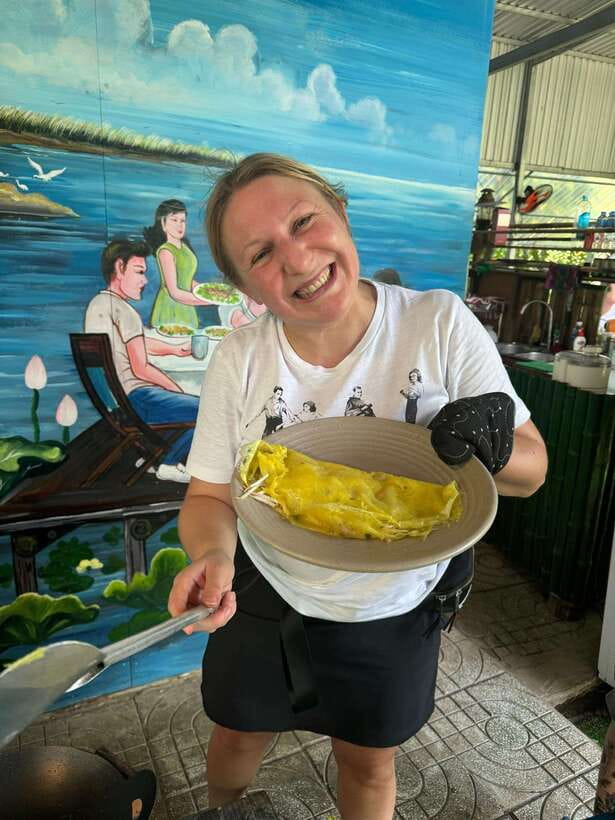
Around 11:30 am, you’ll move into a cooking class. This isn’t only about eating lunch. It’s about learning the basics in a hands-on way, and you get to make at least two featured dishes:
- Spring rolls
- Bánh xèo (pancakes)
The lesson continues with a full meal afterward. The included menu includes vegetable soup, grilled shrimp, grilled pork ribs, grilled chicken, stir-fried vegetables, spring rolls, pancakes (bánh xèo), white rice, and dessert. Having that many items included means you’re not hunting for lunch on your own during a long day—you just get fed.
Why I think this works well for most people: cooking class time gives your body a break after cycling and field activities. It also gives you a “portable memory.” You can bring the taste home later, which is more useful than collecting another photo from a scenic stop.
If you’re curious about Vietnamese home cooking but don’t want a full-day class, this is a sweet middle ground: structured teaching, then you eat what you made.
Canoe boat time and the fruit orchards: lemon, guava, and dragon fruit
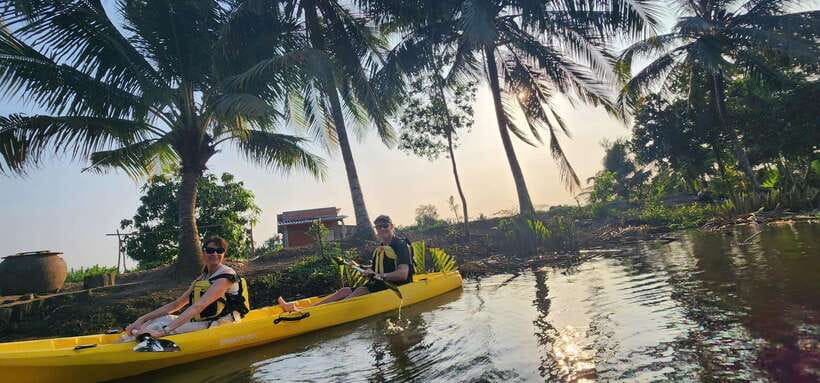
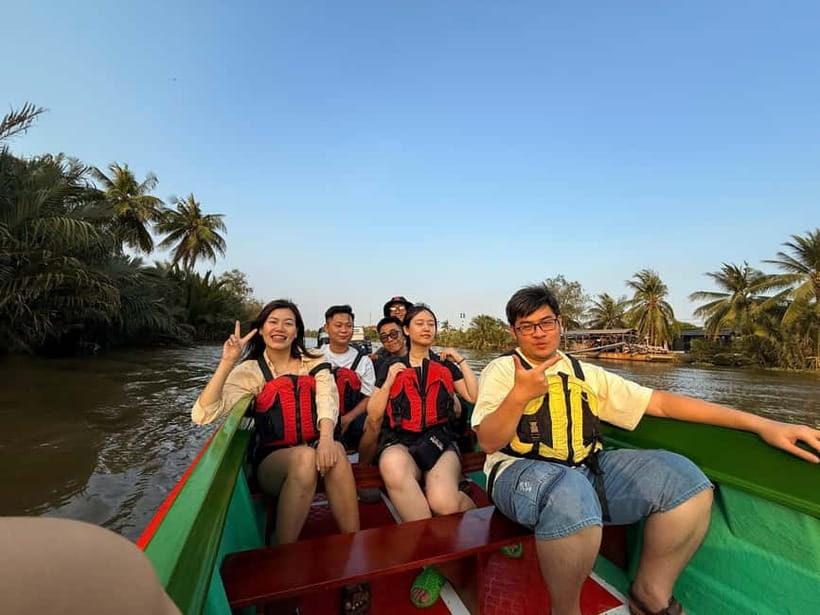
After lunch, you’ll head to the canoe segment and orchard visit around 2:30 pm. Check in at the canoe boat part (named Canoe boat Charm Adventure) sets you up for a slower, river-level perspective. Canoeing is different from cycling because you’re gliding. You see the shoreline and the orchard borders in a way that feels more connected than standing still.
The program then takes you to fruit gardens and orchards—specifically lemon, guava, and dragon fruit. The tour also notes seasonal fruits like dragon fruit, grapefruit, guava, and mango, so depending on the time of year, the exact mix may vary. Either way, it’s a chance to connect what you ate for lunch and what you’ll see along the river: agriculture plus waterways equals a living food supply.
One more reason this canoe-and-orchard pairing is valuable: it helps you see fruit as a system, not a display. The guide explains growing and caring processes, and you get context that ties directly back to earlier farm work.
Kayaking through the coconut water forest: calmer paddling at the end
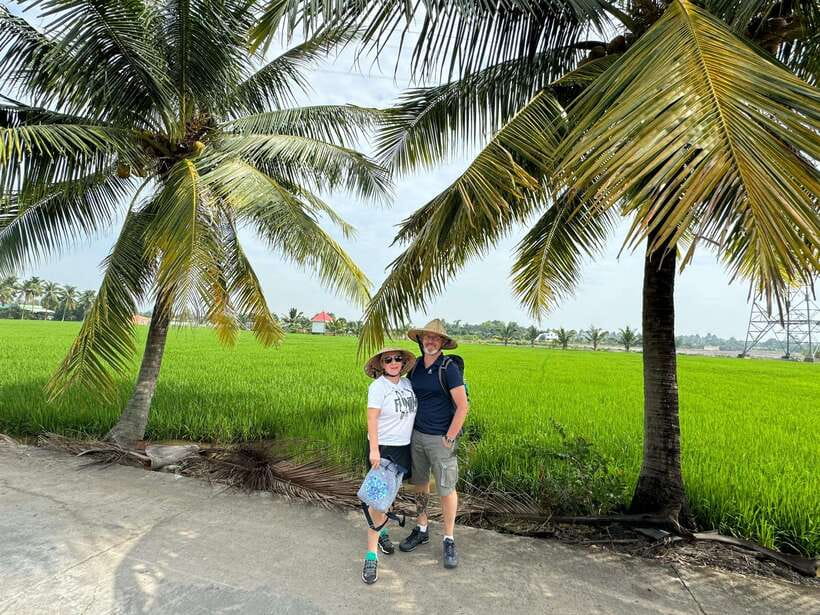
Later, around 3:20 pm, you’ll switch to kayaking. This part is described as kayaking through the coconut water forest—a quieter, nature-focused segment where you spend more time in the rhythm of paddling than in the hustle of stops.
This is a smart way to end the day’s activities. The morning includes cycling, tunnels, planting, and cooking. By the time you kayak, you’ve already built the story of how the delta works. Now you get a slower finish that feels restorative.
You’ll wrap up the tour around 4:00 pm and return to Ho Chi Minh City, getting back to District 1 around 5:00 pm.
If you’re worried about fatigue: this is exactly why the order works. Kayaking is active, but it’s also repetitive in a soothing way—ideal after a packed morning.
Price and value: is $39 a smart deal for this schedule?
At $39 per person, this tour is priced for a day that combines a lot of real activities: cycling, an underground tunnel pagoda entrance, canoeing, kayaking, a cooking class, plus a full included lunch with multiple dishes, not a simple snack plate.
Here’s the value equation I see:
- You get transportation from District 1 in modern A/C and a full day plan, so you don’t have to stitch together multiple providers.
- You’re not just observing farming—you do rice planting and catching fish, which is where many tours would charge extra for a “hands-on” add-on.
- The meal is fully included with a detailed menu, so you avoid the most common cost trap of day tours in Vietnam (hidden lunch extras).
The main reason someone might hesitate isn’t price—it’s energy level and expectations. If you prefer minimalist travel, fewer physical activities, and mostly sitting-in-views, this day might feel busy.
But if you like active, small-group, locally guided days, the cost feels fair for the amount of programming packed into a single morning-to-evening arc.
Who should book this day trip (and who should skip it)
You’ll likely love it if:
- You want a Mekong Delta day trip from Ho Chi Minh City that feels practical, not just scenic
- You’re excited by cooking and want to learn spring rolls and bánh xèo
- You’re comfortable doing farm-style activities like rice planting and fishing
- You like small-group experiences (limited to 12 participants)
You might want to skip or rethink if:
- You don’t want an early start or a full 8–9 hour schedule
- You’d rather avoid hands-on activities, especially anything involving fishing or field work
- You prefer a slower pace with fewer transitions
For many people, this tour hits the sweet spot: city time in the morning, delta time during the day, and a full meal plus skills you can repeat later.
Should you book New Mekong Delta Nature 1Day: Bicycle-Kayak-Canoe & Fishing?
I’d book it if you’re looking for an authentic Mekong Delta experience that mixes rice-field cycling, Xom Trau Pagoda’s underground tunnel relic, a real cooking class, and both canoe and kayak on the water. The price is hard to beat for the range of included activities and food.
I would only hesitate if you’re tired of active days or you want mostly comfort and sightseeing. This one asks you to participate. If you’re okay with that trade-off, you’ll leave with the kind of knowledge that sticks—how rice gets grown, how river life feeds people, and how Vietnamese dishes are made from scratch.
FAQ
How long is the Mekong Delta Nature day trip?
The tour lasts about 9 hours, with travel time included. The schedule is described as 8–9 hours total.
Where do you get picked up in Ho Chi Minh City?
Pickup is included from hotels in the center of Ho Chi Minh City, specifically District 1.
What activities are included during the day?
You’ll do bicycle riding, visit Xom Trau Pagoda (with underground tunnel entrance), rice planting and catching fish, a cooking class, canoe boat time, and kayaking.
What dishes are included in the lunch from the cooking class?
The included menu lists vegetable soup, grilled shrimp, grilled pork ribs, grilled chicken, spring rolls, stir-fried vegetables, pancakes (bánh xèo), white rice, and dessert.
What language is the guide?
The tour includes an English-speaking guide, and Vietnamese is also available.
Is the group small?
Yes. The tour is limited to 12 participants.
Is transportation included?
Yes. You’ll travel by modern A/C transportation, and mineral water is provided (one bottle per day tour).