Salmon fishing in Juneau without the boat stress. This shore-based tour gets you out for Alaskan salmon with stable footing, plus a hatchery stop that adds meaning to what you’re actually fishing for. You meet at the Goldbelt Tram area, ride a short 10–15 minutes to the Gearshack, and then fish from land—an easy win if you get queasy on boats.
I love the small-group feel (max 8 people) and the hands-on guidance, with guides such as Paul and Michelle, Chance, and Derek known for patience and stepping in at the right moment. The main consideration is that salmon fishing is still fishing—some days are slower, so go for the experience and the coaching, not a guaranteed full cooler.
In This Review
- Key Things You’ll Notice Right Away
- Goldbelt Tram to Gearshack: the smooth start that keeps you fishing sooner
- Gearshack basics: poles, lures, boots, and the comfort factor
- The included hatchery tour: why it changes how you fish
- Shore fishing for Alaskan salmon: stable footing, hands-on coaching, real odds
- How the fishing portion typically feels (and what to do when bites are slow)
- Small-group tour size: why 8 people makes a difference
- Who this Juneau salmon shore trip is best for
- What you can take home: processing and shipping support
- Weather and reality check: what to expect in Juneau salmon season
- Price and value: where your money goes in 3 hours
- Tips to make your day smoother (so you enjoy it more)
- Should you book this Juneau shore fishing experience?
- FAQ
- How long is the Juneau shore fishing tour?
- Where do I meet for the tour?
- Is transportation included?
- What fishing gear is provided?
- Is rain gear and footwear included?
- Do I need a fishing license?
- What else is included besides fishing?
- What is the group size?
- Who can join?
- What happens if the weather is poor?
Key Things You’ll Notice Right Away
- Short ride to the Gearshack (about 10–15 minutes) keeps your time focused on fishing, not commuting.
- Shore fishing means solid ground and a lower chance of getting knocked around by waves.
- Gear and rain protection are provided (poles, lures, bait if needed, plus boots and rain gear).
- Hatchery tour is included, giving you context for what you’re seeing and catching.
- Up to 8 people per group so you get attention instead of blending into a crowd.
- Local processing and shipping can help you take your catch home without hauling it yourself.
Goldbelt Tram to Gearshack: the smooth start that keeps you fishing sooner
The day kicks off near the Goldbelt Tram at 490 S Franklin St in Juneau, which is a nice setup if you’re already timing your glacier and town plans. The tour runs seasonally (late May through mid-September, with set daily time windows), so you’ll want to pick the slot that matches your cruise or hotel schedule.
From the meeting point, you get direct transportation to the Gearshack outfitting office. The ride is short—about 10–15 minutes—and it matters because you’re not burning your limited time in Juneau on transit. It also means you’ll likely arrive with enough energy to get your gear sorted quickly.
Once you’re at the Gearshack, you don’t need to figure anything out from scratch. The flow is simple: you’ll use the equipment provided, get briefed on what to do, and then head into the shore-fishing portion of the experience. That structure is especially valuable if you’re new to fishing or you just don’t want a steep learning curve.
You can also read our reviews of more tours and experiences in Juneau.
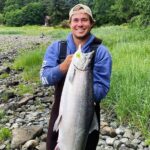
Gearshack basics: poles, lures, boots, and the comfort factor
A lot of fishing tours fail the comfort test. This one doesn’t, at least on the gear side. You’re provided with fishing poles and lures, and bait is available if it’s needed. More importantly, you also get rain gear and boots, which is the real make-or-break item in Juneau.
If you’ve ever tried to “be brave” in wet cold weather, you already know how fast that turns into a bad memory. Here, you show up with the right basics, then focus on the fun part: learning your cast, reading the water, and landing salmon.
The tour is designed for moderate physical fitness, and the shore setup helps a lot. Still, you’ll want to wear layers you can move in, because salmon fishing often means standing, leaning, and adjusting your stance.
And yes—being able to stay on land can help you avoid sea sickness. That’s not a small perk in Juneau, where boat days are common and the wind can make things feel unpredictable.
The included hatchery tour: why it changes how you fish
This experience isn’t only about pulling fish. You also get a hatchery tour as part of the included time. That matters because salmon fishing can feel a bit like pure luck if you don’t connect it to the life cycle happening around you.
Seeing the hatchery side adds context to what you’re trying to catch—and it also gives you a break from the action. On a weather day that’s chilly or showery, this kind of indoor or protected stop keeps the experience feeling full, not half-finished.
I also like that the hatchery tour fits naturally into the rhythm of the day. You’re not just waiting for fishing time. You’re building understanding, then stepping back into the outdoors with clearer expectations about timing and behavior.
Shore fishing for Alaskan salmon: stable footing, hands-on coaching, real odds
The core of the day is shore fishing for Alaskan salmon—and the “shore” part is a big deal. When you’re on solid ground, you can concentrate on what actually works: your bait placement, your hook setting, and the way you respond when something bites.
The experience is small (max 8), and that’s where the coaching shines. Guides such as Paul and Michelle, Chance, Josh, Noah, and Derek are repeatedly described as patient and present—especially when someone is new. That shows up in the way they help you land and release fish, and it’s a huge confidence boost if fishing isn’t your hobby at home.
Sometimes fishing days are productive, and sometimes they’re not. Even when salmon are slow, a good guide can still keep the outing enjoyable by focusing on technique and keeping people engaged. One of the practical reasons to choose a shore tour is that you can often adjust without dealing with the logistics of getting everyone back onto a boat again.
One caution: salmon can still be elusive. If you’re planning this as your one shot to catch a trophy fish, you might leave with a better appreciation for the process than a freezer full of salmon. But if you want a guided lesson with plenty of chances, this fits well.
How the fishing portion typically feels (and what to do when bites are slow)
You’ll fish from locations connected to the shore setup near the Gearshack area. The tour is designed to keep you busy, and you’ll have the chance to practice multiple casts and techniques rather than standing still for long stretches.
When bites are active, you’ll feel the pace pick up fast. When they aren’t, you’ll want to switch from “waiting for a miracle” to “working the water.” That might mean changing how you position your bait, adjusting your timing, or simply being more consistent with your line handling.
This is also where guide personality matters. I like seeing guides who stay helpful even when the catch rate isn’t perfect. In this tour, you’ll find that theme shows up again and again—guides staying upbeat, staying close, and helping you improve rather than disappearing once you’ve got a pole in your hands.
If your goal is family time, shore fishing is often easier than boat fishing because you can keep an eye on each other. It’s also a good match for people who get uncomfortable with strong motion.
Small-group tour size: why 8 people makes a difference
A group of up to 8 can feel small in a good way. It means the guide isn’t trying to manage everyone at once like a moving classroom. Instead, you can get guidance that fits your skill level and your pace.
This matters if you’re bringing kids, if someone in your group doesn’t fish often, or if you’re trying to learn in a single day. People on this tour are often looking for a mix of fun and instruction, and a small group helps you actually receive both.
It also improves the experience for “first-timers.” There’s a big difference between being handed a rod and being shown how to use it. With this setup, you’re more likely to feel supported throughout the session rather than stuck with trial and error.
Who this Juneau salmon shore trip is best for
I’d put this tour in the “practical and beginner-friendly” category. It suits:
- Families who want an Alaskan activity that’s active but not boat-chaos.
- Couples who want a guided fishing experience without the hassle of organizing gear.
- Friends or solo travelers who want shore fishing coaching and a small group.
- Anyone who wants a hatchery stop that connects the dots between salmon life and fishing.
It’s also good if you’re traveling with someone who gets sea sick or just hates the idea of dealing with waves. The shore-based plan keeps you on solid ground.
The age range starts at 6, which suggests the pacing and handling is designed to work for kids old enough to listen and follow safety cues. The physical fitness requirement is listed as moderate, so if you have mobility limitations, you’ll want to consider the standing and shifting involved in shore fishing.
What you can take home: processing and shipping support
One of the highlights is the chance to bring home what you catch with local processing and shipping. That’s a real value in Alaska, where fresh seafood is tempting but hauling it yourself can be stressful.
You’re not just aiming for a fun morning—you’re also thinking about keeping salmon safely and tasting it later. This tour’s promise of local handling helps you avoid the “what do I do with this now?” problem.
Just note that the catch rate still varies. If the day is slower, you may come home with fewer fish than you hoped. But the upside remains: you’re not building an extra plan around logistics when you’d rather spend your time in Juneau.
Weather and reality check: what to expect in Juneau salmon season
Juneau weather can change fast. This experience is weather-dependent, which makes sense because you’re outside and shore fishing is affected by wind, rain, and conditions at the fishing area.
I like tours that factor this in openly rather than pushing you out no matter what. If weather cancels the outing, you’ll typically have an option to move to another date or get a refund.
Even with good weather, salmon are not guaranteed. A shore tour gives you structure, gear, and coaching—but it can’t control whether salmon decide to bite that day. When you’re thinking about your expectations, treat this as a guided salmon-fishing outing plus a hatchery visit, not a guaranteed catch machine.
Price and value: where your money goes in 3 hours
No price is listed here, so I can’t compare numbers directly. But I can tell you how the value is built.
You’re getting:
- Fishing poles and lures (and bait if needed)
- Rain gear and boots
- Transportation to and from the Gearshack
- A hatchery tour
- A small-group guide who helps you with technique
The main item not included is the fishing license, so you’ll want to plan for that in advance. If you already know you’ll need a license anyway, the package still feels focused. The tour reduces decision fatigue: you don’t have to source gear or figure out where to go for shore fishing.
For a roughly 3-hour experience, this is a strong setup if you want maximum instruction per hour and you like the idea of combining nature with a salmon-focused hatchery visit.
Tips to make your day smoother (so you enjoy it more)
You’ll get rain gear and boots, which covers the basics. Still, you’ll do better with a few smart moves:
- Wear layers you can move in, not bulky clothing that restricts your stance.
- Bring a light warm layer even if it looks mild at the start.
- Keep your phone protected. Shore fishing can involve splashes and wet hands.
- Listen closely when the guide explains how they want you to handle your line and bait.
- If bites are slow, focus on consistency and follow the guide’s adjustments rather than changing everything at once.
Also, if you’re bringing a first-time fisher, ask for early coaching. The best results usually come from learning the first setup correctly, then refining it while you fish.
Should you book this Juneau shore fishing experience?
If you want a guided Juneau shore fishing for Alaskan salmon day that’s beginner-friendly, gear-provided, and paired with an included hatchery tour, this is an easy yes. The small-group size and the repeated emphasis on patient, hands-on guidance (with guides like Paul and Michelle, Chance, Derek, and Noah) make it especially appealing if you’re not a lifelong fisherman.
Book it if you:
- Prefer stable footing over boat time
- Want a hatchery stop that adds meaning
- Like guided instruction and a small group
- Want help with processing and shipping so you can take salmon home
Skip it or adjust expectations if:
- You’re counting on a guaranteed big catch
- You don’t want to handle the extra step of getting a fishing license
- Your schedule only allows one rigid fishing window, since weather can affect outdoor conditions
Bottom line: if you’re aiming for a fun, practical Alaska activity with real guidance and the chance to learn, this Juneau shore fishing trip is a solid choice.
FAQ
How long is the Juneau shore fishing tour?
The experience runs for about 3 hours (approx.).
Where do I meet for the tour?
You start at Goldbelt Tram, 490 S Franklin St, Juneau, AK 99801, USA. It ends back at the same meeting point.
Is transportation included?
Yes. You get transportation to and from the pick-up and drop-off locations, including the ride to the Gearshack (about 10–15 minutes).
What fishing gear is provided?
The tour includes fishing poles and lures, and bait if needed.
Is rain gear and footwear included?
Yes. Rain gear and boots are provided.
Do I need a fishing license?
Fishing licenses are not included.
What else is included besides fishing?
A hatchery tour is included.
What is the group size?
The maximum group size is 8 travelers.
Who can join?
The tour is for ages 6 and older, and it calls for a moderate physical fitness level. Service animals are allowed.
What happens if the weather is poor?
The experience requires good weather. If it’s canceled due to poor weather, you’ll be offered a different date or a full refund.