REVIEW · ALESUND
Fishing village Bud and Atlantic Ocean Road in Molde
Book on Viator →Operated by West Norway Travel · Bookable on Viator
The Atlantic Ocean Road steals the show. This 4-hour Molde-area loop mixes big fjord views with real, working Norway. I love the Atlantic Ocean Road’s 8 bridges and the Varden panorama over Molde and the islands. I also like how the stops connect to everyday life, from marble mining to cheese. One catch: Bud is mainly a short photo stop, so don’t plan on a long village wander or a shop visit.
You’ll ride by key Molde highlights like the Rose Maiden and Jazz Boy, then keep rolling through fjords, mountains, and coastal towns. The pace is built around short, satisfying stops—some with a little walking, most focused on getting the view.
If weather turns rough, the sea stretch called Hustadvika can be tricky due to shallows and sandbanks. And because a lot of time is spent on the bus, how much you enjoy the ride depends on your comfort with scenery-forward travel.
In This Review
- Quick takeaways
- Where this tour fits: Molde’s coast, but with purpose
- Starting in Molde: Rose Maiden, Jazz Boy, and the city’s face
- Malmefjorden in winter context: why some fjords freeze
- Marble mining and the cave system: 1938 to 40 km of underground space
- Eide’s electricity history and the industry around it
- The Atlantic Ocean Road: 8 km, 8 bridges, and Hustadvika’s challenge
- Eldhusøya peninsula: best bridge views plus a short walk
- Håholmen and Ragnar Thorseth: clipfish islands to Vikings on land
- Farstadsanden: the world’s northernmost dunes (and summer fun)
- Elnesvågen and Jarlsberg cheese: a real local origin story
- Bud fishing village: short stop, strong sea vibe
- Varden Molde Panorama: 407 meters and a clear-day bonus
- Hotel Seilet: Molde’s sail-shaped landmark on the way back
- Price and time: is $117.68 worth it for this 4-hour format?
- How to get the most from the day (and avoid common frustration)
- Who this tour is best for
- So, should you book it?
- FAQ
- How long is the tour?
- How much does it cost, and is it worth it?
- What language is the tour offered in?
- Do I need to bring anything physical for tickets?
- How big is the group?
- What’s the cancellation plan if my plans change?
Quick takeaways
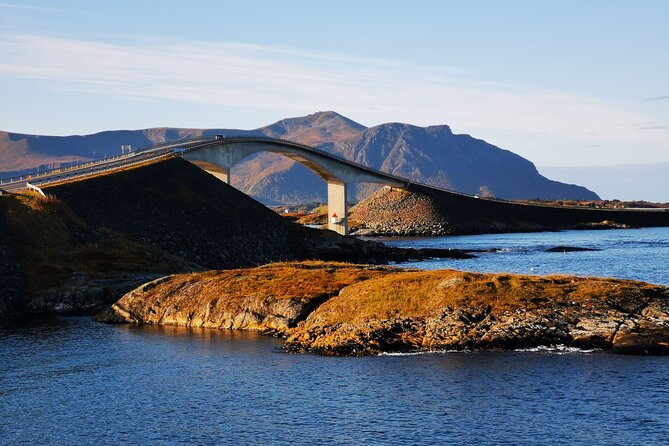
- 8 bridges, 8 km of drama: The Atlantic Ocean Road section is long enough for real views, not just a quick drive-by.
- Varden viewpoint (407 m): Clear days can show the Romsdal Alps and their many peaks.
- Marble + caves + concerts: You’ll hear why the region is famous for marble and why people gather in a cave system about 40 km long.
- Sand dunes at Farstadsanden: A standout photo stop with the world’s northernmost sand dune formation.
- Bud is about the sea view: Expect coastal history and island views, not a long cultural museum stop.
- Small-group feel: Max 45 people, and English is offered, with a mobile ticket.
Where this tour fits: Molde’s coast, but with purpose
This is a short, high-impact way to see a lot of the Molde area without needing to drive yourself. You get a mix of icons and working places: seaside infrastructure, fjord scenery, quarrying history, and coastal villages. It’s the kind of day trip that makes sense when you want variety more than deep time in one spot.
The best part is that the route isn’t only scenic. It links the sea to local industry—marble, limestone, and even the story behind Jarlsberg cheese. That makes the views feel more grounded and less like just another photo circuit.
Starting in Molde: Rose Maiden, Jazz Boy, and the city’s face
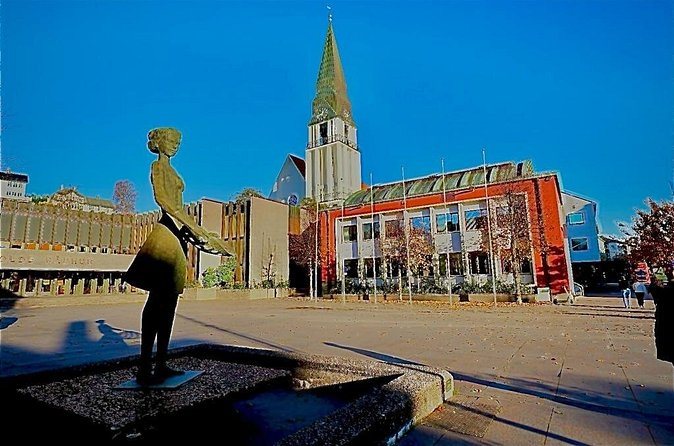
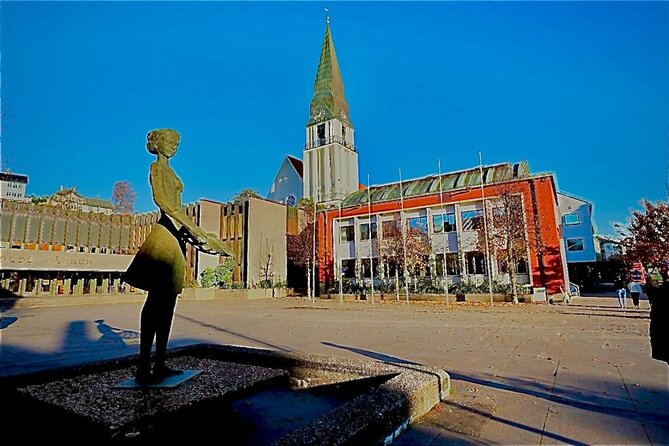
Your day begins with a look at several of Molde’s well-known sights. You’ll pass the Rose Maiden (a landmark tied to the city’s famous rose tradition), the Jazz Boy, and the Rosegarden area. You’ll also get sightlines toward the football stadium and Moldegård.
Even if you don’t get out of the bus for these stops, it helps to see how Molde “reads” from the road—coastal calm mixed with a city layout that’s easy to navigate on foot if you decide to return later. I like tours like this when I’m trying to orient myself fast.
Malmefjorden in winter context: why some fjords freeze
Next, you’ll pass by areas associated with hiking and skiing, then move toward the fjord Malmefjorden. This is one of the fjords that can freeze in winter because of freshwater entering the last part of the fjord.
Why that matters for your trip: it’s a small detail that changes the way you interpret the water you’re seeing. The coast in this region can look similar from a distance, but the behavior of the fjord in winter is a real local story—one that you only understand when it’s explained.
Marble mining and the cave system: 1938 to 40 km of underground space
Then the tour shifts inland-to-coast in a story way. The region is surrounded by mountains with high-quality marble. Marble mining began here in 1938, and the marble was mainly used for paper production.
Today, people use the cave system in a completely different way. You’ll hear about concerts and events taking place in caves that stretch about 40 km. If you care about how landscapes get repurposed by culture and industry, this part gives you a deeper reason to pay attention to what otherwise looks like just rock and slopes.
Eide’s electricity history and the industry around it
In Eide, there’s a specific history about electricity—something the guide will explain during the drive. It’s also where marble and limestone manufacturing companies are based.
This is the kind of stop that doesn’t feel like a “place to linger,” but it helps connect the earlier geology talk to current life. You’ll see that this isn’t a region that just has scenery; it has production and infrastructure that shapes daily rhythms.
The Atlantic Ocean Road: 8 km, 8 bridges, and Hustadvika’s challenge
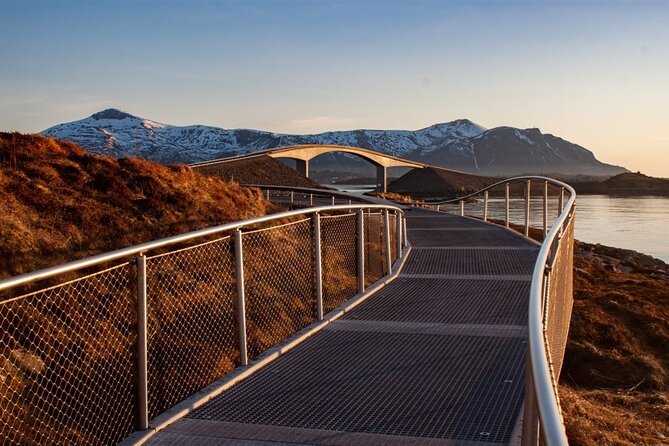
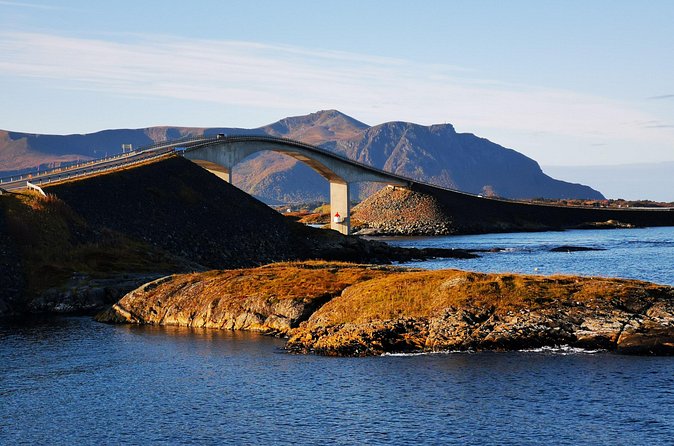
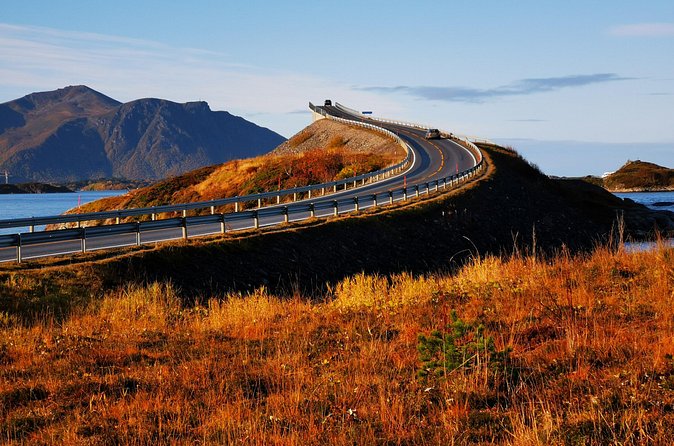
Now you get to the headline: the Atlantic Ocean Road. You’ll cross the main stretch, about 8 km long, with 8 bridges and views over lots of little islets.
There’s also an open sea stretch named Hustadvika. It’s well known by fisherman and cruise ships, but passing it can be difficult in bad weather because of shallows and sandbanks. That means two things for you:
- you’ll want your phone ready for quick photo moments
- you should keep expectations flexible if the weather feels unsettled
You’ll also stop for a photo at the old toll booth with a view over the bridges. For many people, that’s the best “wow” angle because it frames several bridge elements at once.
Eldhusøya peninsula: best bridge views plus a short walk
One stop is Eldhusøya, where you’ll get a photo stop and the chance for a walk around the peninsula. You’ll have about 30 minutes, and admission is free.
This is where you get out of bus-view mode. The short walk matters because it changes your angle—often the difference between a flat, distant bridge shot and a photo that feels like you’re standing inside the scene.
Håholmen and Ragnar Thorseth: clipfish islands to Vikings on land
Then you’ll head to Håholmen. In older times, it was a clipfish island. Clipfish is a traditional drying method for fish in the southwestern part of Norway, and the tour explains how that shaped coastal life.
Today, Håholmen is associated with a small hotel and a Viking museum tied to the former owner and adventurer Ragnar Thorseth. Even if you don’t spend hours there, the story connection is clear: this place used to be about survival and drying fish, and now it’s about preserving identity through a museum setting.
Farstadsanden: the world’s northernmost dunes (and summer fun)
Next comes the sand dunes at Farstadsanden, described as the world’s northernmost formation of sand dunes. In summer, locals enjoy the beach for swimming and surfing, and you’ll get a photo stop with a view of the shoreline.
This stop is simple but memorable. The image of sand dunes so far north can feel surprising, and it makes the coastal environment feel less uniform than you might expect.
If you’re traveling in summer, it’s worth dressing for quick changes in temperature. The coast can be cool even when the town is warmer.
Elnesvågen and Jarlsberg cheese: a real local origin story
You’ll pass through Elnesvågen, which is tied to the birthplace of Jarlsberg cheese—one of Norway’s best-known cheese brands. This is a fun twist because it’s not another viewpoint; it’s a food identity stop embedded in the route.
For me, the value here is context. When you know why a brand name started in a specific place, it’s easier to remember the region as something with traditions, not just postcards.
Bud fishing village: short stop, strong sea vibe
The tour then heads to Bud, a historical fishing village. You’ll have about 20 minutes for a photo stop with views over the sea and the Bjørnsund Islands.
Important expectation-setting: Bud is mainly about the coastal view and the sense of where fishing community life once ran. It’s not positioned as a long browsing stop, and time is tight. Bring your camera, look for island patterns across the water, and treat it as a snapshot of Norway’s fishing past.
Varden Molde Panorama: 407 meters and a clear-day bonus
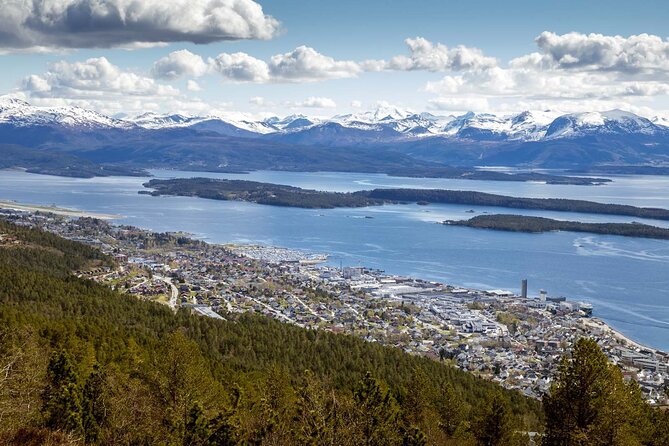
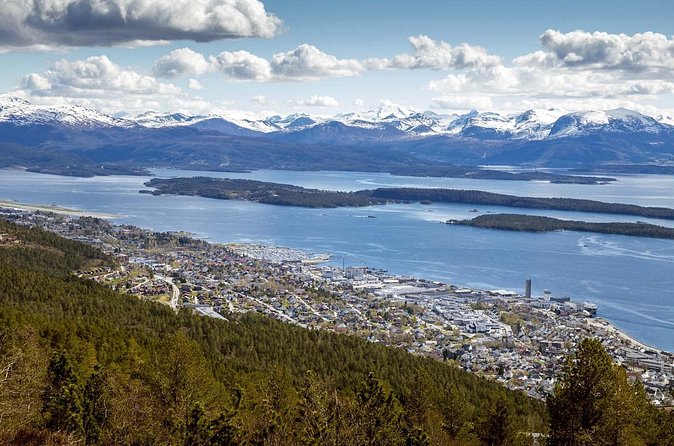
After Bud, you reach Varden the Molde Panorama viewpoint at 407 m above sea level. You’ll get about 15 minutes here, and the payoff is a view over Molde and the fjord landscape with many islands.
On a clear day, you can also see the Romsdal Alps with 222 mountain peaks. Even if the Alps aren’t visible for you, this viewpoint still helps you understand the scale—how islands and fjords fit together around Molde.
Pro tip: if the sky looks even slightly uncertain, I’d still plan to take photos quickly and then watch how visibility changes over the next few minutes.
Hotel Seilet: Molde’s sail-shaped landmark on the way back
As you drive back through Molde, you’ll see Hotel Seilet. It’s built in a sail-like style, inspired by the Burj al Arab in Dubai, and it stands about 82 m high.
This final sight is good for closing the loop. You start with city icons, end with a modern shape that looks like it belongs on the water. It’s a nice way to turn the ride into a story arc.
Price and time: is $117.68 worth it for this 4-hour format?
At $117.68 per person for about 4 hours (including travel time), you’re paying for access to a lot of geographically spread stops in one organized block. This price makes sense if you want:
- photo-focused viewing without planning multiple drives
- explanations tying sights to local industry and geography
- a route centered on the Atlantic Ocean Road plus Molde viewpoints
If you’re the type who needs long museum visits or long walks, you may feel shortchanged because several stops are photo stops and the day is compact. But if you like “see a lot, learn a bit, take photos,” the value is strong.
Also note the group size cap of 45. That usually helps keep photo stops manageable and reduces the feeling of being packed in.
How to get the most from the day (and avoid common frustration)
This experience is scenic-forward, with quick windows to get out and look. That means your success depends a lot on readiness.
- Bring a camera mindset: Think short shots first. You’ll have specific photo-stop moments at Eldhusøya, Farstadsanden, the old toll booth, and Bud.
- Dress for coast weather: Even in decent conditions, the sea wind can be sharp, especially near viewpoints and dunes.
- Plan for bus time: Some days feel more like scenery with narration than a stop-and-go walking tour.
- Ask for clarity if you’re unsure about meeting points: One of the biggest pain points people experience with shared tours is not the scenery, but confusion about where the bus is. If your instructions are vague, it’s worth confirming.
Who this tour is best for
This tour is ideal if you:
- want the Atlantic Ocean Road experience without driving
- like quick stops that still explain the “why” behind places
- enjoy views that mix fjords, bridges, dunes, and island geography
- are okay with short time windows at each location
It may be less ideal if you need lots of time in one village or you’re expecting a “fully developed” Bud visit. Think view-first, story-second, time-limited.
So, should you book it?
I’d book this if your priority is the Atlantic Ocean Road plus a strong set of Molde-region viewpoints in one half-day. The route does a good job connecting scenery to local facts—marble mining, cave concerts, Eide electricity history, clipfish traditions, and even cheese origin.
Hold off if you want a long, village-based cultural experience at Bud or if you dislike bus-heavy days with short photo stops. And if weather is questionable, I’d keep expectations flexible for Hustadvika driving conditions.
If you can, choose a day when the forecast looks calmer around the coast. That’s when the bridges, the fjords, and the 407 m panorama tend to deliver their best results.
FAQ
How long is the tour?
The tour runs for about 4 hours (approx.), and the total duration includes travel time.
How much does it cost, and is it worth it?
It costs $117.68 per person. Given the number of major sights covered around Molde, the Atlantic Ocean Road, and viewpoints, it’s good value if you want a packed, scenic half-day with narration.
What language is the tour offered in?
The tour is offered in English.
Do I need to bring anything physical for tickets?
No. You’ll use a mobile ticket.
How big is the group?
The maximum group size is 45 travelers.
What’s the cancellation plan if my plans change?
You can cancel for free up to 24 hours in advance for a full refund.