REVIEW · INARI MUNICIPALITY
Arctic Fishing & Open Fire Cooking
Book on GetYourGuide →Operated by Xwander Nordic · Bookable on GetYourGuide
Ice fishing feels like stepping back in time. This trip near Rahajärvi in Ivalo pairs traditional Lappish winter fishing—holes, lines, and nets under the ice—with a cozy finish where you cook what you catch over an open fire.
What I like most is the way it’s taught step by step. You get real practice with kairaaminen (drilling), pilkkiminen (ice fishing), and juomustus (net fishing under the ice), not just a quick look-and-leave.
One thing to consider: you’ll be outside in changing winter weather, so you’ll want proper windproof layers and warm gloves. If you dress for warmth and movement, the cold becomes part of the fun instead of the problem.
In This Review
- Key things to know before you go
- Rahajärvi by Ivalo: why this area fits Arctic fishing
- Meeting at Xwander: timing that keeps the day comfortable
- The ice starts with kairaaminen drilling
- Pilkkiminen and juomustus: fishing with lines and nets
- Pilkkiminen: ice fishing with a line
- Juomustus: net fishing under the ice
- When the fish becomes your dinner: open-fire cooking in the tent
- What to bring (and what actually matters in Lapland cold)
- Guide support: the secret sauce for ice fishing success
- Price and value: is $167 worth 5 hours in the cold?
- Transfers, meeting point, and how to plan the rest of your day
- Who this Lapland ice fishing experience suits best
- Should you book this Arctic Fishing & Open Fire Cooking trip?
- FAQ
- How long is the Arctic Fishing & Open Fire Cooking trip?
- Where do we meet, and what time should we arrive?
- Does the trip include food and cooking equipment?
- What fishing methods will I learn?
- Is transfer included from Ivalo and nearby areas?
- Is winter clothing provided?
- What should I bring with me?
- What languages are the guides available in?
- What is the cancellation policy?
Key things to know before you go
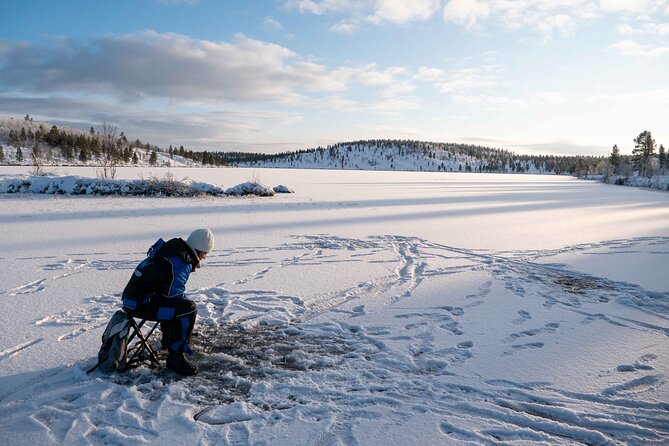
- Three real Lappish fishing styles: drilling, line fishing, and net fishing under the ice
- You eat what you catch with an open-fire cooking setup and tableware provided
- Campfire warmth in a forest setting (including warm dishes and even marshmallow-style treats)
- Guides who help you succeed, including families with kids and grandparents in the mix
- A short, focused 5-hour format that keeps the day moving at an Arctic pace
Rahajärvi by Ivalo: why this area fits Arctic fishing
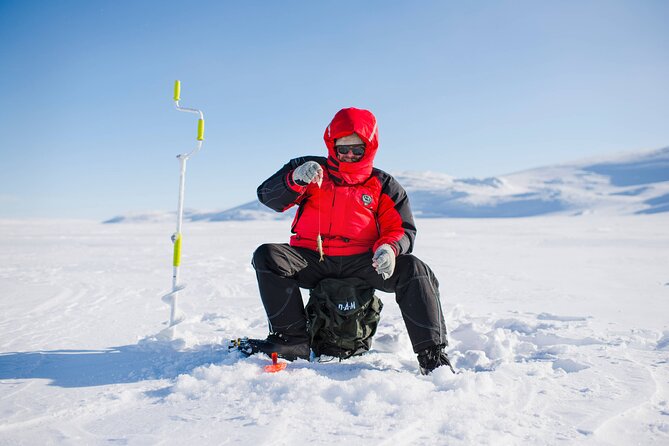
This is Lapland fishing where the water stays cold and clear. That matters because it affects the fish you’ll be dealing with—cold, clean waters tend to mean a better eating experience. You’re also fishing in a place where winter feels like the main character: ice, snow, and quiet woods that make every sound—gear clinks, boots crunching, fire crackling—feel amplified.
I like that the trip doesn’t pretend you’re visiting some theme park version of the Arctic. It’s grounded in actual winter work: get to the lake, deal with ice, and learn how to fish in that environment. If you like nature without distractions and you’re curious about how people fish here in winter, you’re in the right place.
Also, the location around Ivalo is a practical base. The schedule is built around a morning start, with enough daylight and time to get you back to the shop around mid-afternoon, around 15:15.
Meeting at Xwander: timing that keeps the day comfortable
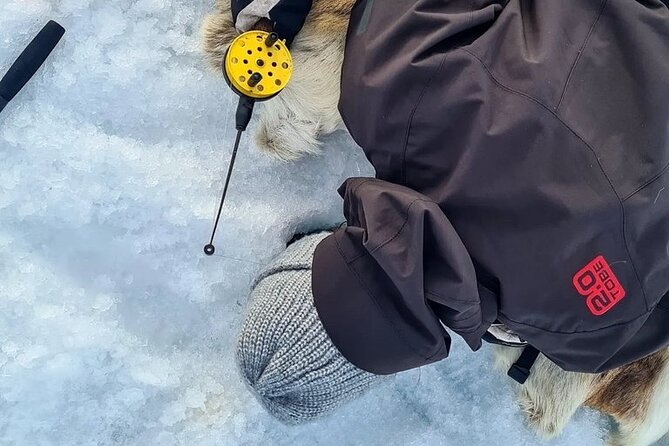
You start at 10:00 from the Eräsoppi / Xwander shop at Ivalontie 12. The catch is simple: be there by 9:45, so you’re not rushing while the guides get everyone ready.
From the shop, you go by car to the lake. That little transfer is useful. It saves energy and keeps the start smoother—because once you’re out on the ice, you’ll want your body warm and ready for physical tasks like drilling.
The trip is about 5 hours total. That length is important. Long trips can turn “fun winter adventure” into “exhausted survival.” Here, the structure is tight enough that you spend most of the time doing the main activities—fishing and cooking—then head back while you still feel good.
And yes, there’s a minimum of 2 participants, so the experience should run even if you’re not joining a huge crowd.
The ice starts with kairaaminen drilling
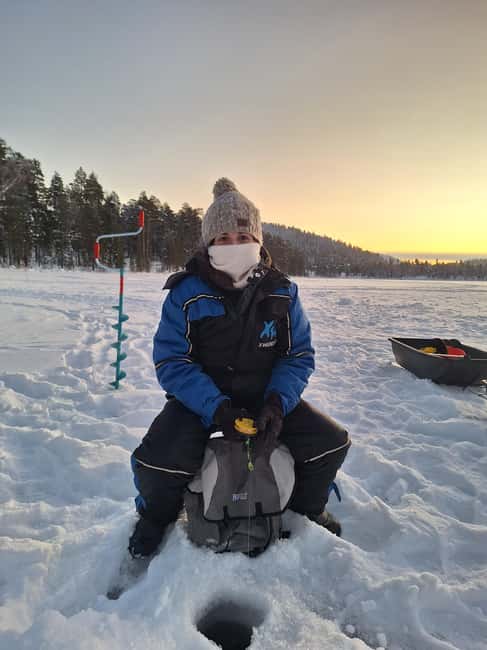
The first hands-on skill you’ll learn is kairaaminen, drilling holes into the ice. This is where the trip really earns its authenticity. Ice fishing isn’t just about dropping a line. It begins with getting access to the water beneath a thick, frozen surface.
Expect to feel it in your hands and shoulders at the start. Drilling through ice isn’t delicate work. If you’ve never done it before, you might struggle at first—straightness, angle, effort, timing. The guides are there for that. They’ll show you what to do and help you get going, so you’re not standing there confused with cold gear.
What I like about this step is how quickly it turns into competence. Once your hole is working, everything else feels more doable: you can fish, you can adjust, and you can participate rather than just observe.
One practical note: bring warm, windproof clothing. Winter conditions can change quickly, and you’ll be outside while you drill. If you keep your body warm and steady, the drilling becomes part of the adventure instead of a chore.
Pilkkiminen and juomustus: fishing with lines and nets
After the holes are ready, you move into pilkkiminen and juomustus—and this is where the day goes from activity to understanding.
Pilkkiminen: ice fishing with a line
With ice fishing, you’re working a smaller setup and usually focusing on controlling your approach: how you handle the line, how you read what’s happening, and how you keep it consistent. The experience teaches you the rhythm. You’re not just waiting—you’re learning how winter fish react under ice.
Even if your first attempt isn’t perfect, the point is that you’ll get coached. That’s especially helpful if you’re going as a family or with mixed ages, because some people pick up the technique faster than others.
Juomustus: net fishing under the ice
Then you get net fishing under the ice. This is a different kind of fishing skill—less about one line and more about the logic of using nets below the surface. It’s also a great way to see how techniques vary based on conditions and goals.
In real terms, this part adds variety. You don’t do the same movement for hours. That keeps attention up, and it helps you stay engaged even if your first bite is slow.
When the fish becomes your dinner: open-fire cooking in the tent
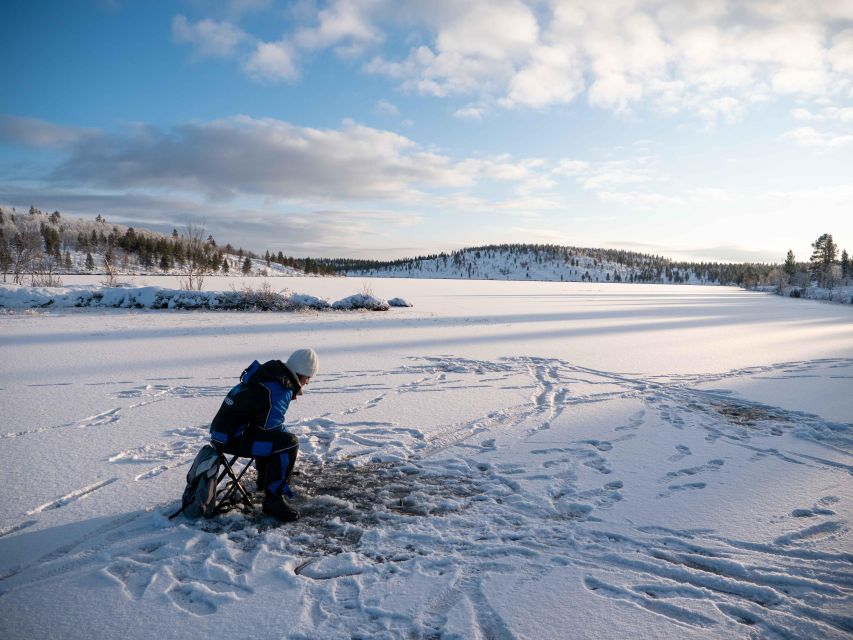
This is the payoff. You fish, then you eat. The trip provides the open-fire cooking setup, plus the cooking equipment and table wear, so you’re not hunting around for utensils in the cold.
What’s especially nice is how the day builds warmth in stages. You’re outside working around the lake, and then you transition into an open-fire cooking session where food smells and heat become the center of the experience.
You may encounter different preparations—one of the most memorable patterns is a warm soup and other cooked fish dishes. Marshmallow-style treats show up as well, which makes it feel more like a campfire day than a survival lesson.
A key point: since your meal is based on your catch, the cooking part doesn’t feel generic. You’re looking at your work coming to life. That turns the campfire from background ambiance into a real moment of pride.
Also, because the cooking happens on an open fire, you’ll learn something useful even if you’ve never cooked outdoors in winter. You see how to handle hot food safely in cold air, and how quickly meals get ready when the team is organized.
What to bring (and what actually matters in Lapland cold)
The tour notes are clear about the basics, and I’d follow them closely. You should bring:
- Warm, windproof clothing
- Camera
- Snacks (optional but smart)
- Water
Winter in Lapland can swing fast. That means even if the morning feels okay, you might catch a colder wind later. Windproof layers are the difference between “fun cold” and “I can’t feel my fingers.”
Also, remember winter clothing is not included. That’s important. If you show up in basic winter gear, you might get cold during drilling and while waiting between fishing actions. If you pack better layers—especially for hands and body insulation—you’ll enjoy the day more.
If you’re the type who tends to overpack, this is one time where a little extra comfort pays off: thermal base layers, warm hat, thick gloves, and a scarf that covers the face a bit when the wind picks up.
Guide support: the secret sauce for ice fishing success
The guides are a core part of what makes this tour work. They don’t just point you at a hole and disappear. They explain how to fish, demonstrate what to do, and give hands-on help—especially when the group includes kids or grandparents.
One helpful detail from real experiences: drilling a hole can be harder than you expect, and net fishing takes coordination. That’s exactly when good guiding makes the difference. It also explains why different groups report success—families, different ages, and first-timers all benefit from patient instruction.
If you go with children, this trip is structured to keep people involved. There’s enough variety—drilling, line fishing, net fishing, then fire cooking—that kids don’t get bored just standing around.
If you’re going solo, or with a partner, you’ll still get the same practical coaching. You’re there to learn and participate, and the format supports that.
Price and value: is $167 worth 5 hours in the cold?
At $167 per person for about 5 hours, you’re paying for more than “fishing time.” Your money covers guided instruction in multiple fishing methods, safety equipment, and a full open-fire food setup including cooking gear and tableware.
Here’s the value math that matters:
- You’re paying for coaching, including help with drilling and technique
- You’re paying for equipment and safety gear (so you’re not sourcing your own)
- You’re eating what you catch, prepared outdoors over an open fire
- You’re not just observing. You’re doing the work, then enjoying the results
Your biggest extra cost is dressing for winter, since winter clothing isn’t included. If you already have real warm gear, this becomes a straightforward value proposition. If you’d need to buy new winter clothing, plan on that before you book.
Also, the trip is fairly short. That keeps the experience concentrated. You don’t need a full day of travel energy to enjoy the main activities.
Transfers, meeting point, and how to plan the rest of your day
You start at the shop in Eräsoppi (Ivalontie 12). If you’re in Ivalo, there’s a complimentary pickup service. If you’re coming from Inari, Nellim, Saariselkä, or Kiilopää, you’ll want to contact the operator ahead to book a transfer.
One important note: the tour lists that transfer to the meeting place isn’t included. That means you should plan to get yourself to the shop area unless your pickup covers you. The simplest approach is to coordinate early so you aren’t figuring logistics on short notice.
The day ends around 15:15, so you’ll have your afternoon back for a warm drink, a sauna, or whatever you plan next in Lapland.
Language-wise, the live guide supports Finnish, English, and French, which is a big help if you want clear instructions without guessing.
Who this Lapland ice fishing experience suits best
This trip fits best if you want hands-on winter culture, not just a scenic walk.
You’ll likely love it if you:
- want traditional ice fishing techniques in one day
- care about eating real food after real work
- like learning through doing, with guide help when you need it
- want a family-friendly Arctic day with multiple activities
- are comfortable spending time outdoors in winter conditions
It may feel less fun if you hate cold and don’t have warm gear. It also may not be ideal if you’re expecting a fully relaxed, minimal-effort outing. Drilling and handling gear are part of the experience. The payoff is worth it, but only if you go prepared.
Should you book this Arctic Fishing & Open Fire Cooking trip?
Book it if you want an authentic Lapland day with structure: learn three fishing styles, cook over an open fire, and eat warm food that connects to what you caught. The hands-on guidance is a real strength, and the combination of ice work plus campfire cooking makes the time feel complete.
Skip it or reconsider if you’re not willing to dress for windy cold or you prefer warm-only activities. Also, if you’re trying to avoid any physical tasks, note that drilling and handling gear are part of the program.
If you’re prepared with proper winter layers and a good attitude, this is exactly the kind of experience that makes Lapland feel personal.
FAQ
How long is the Arctic Fishing & Open Fire Cooking trip?
The duration is about 5 hours.
Where do we meet, and what time should we arrive?
You meet at the Eräsoppi / Xwander shop at Ivalontie 12. Please be there by 9:45, with the activity starting at 10:00.
Does the trip include food and cooking equipment?
Yes. Open fire food, cooking equipment, and table wear are included.
What fishing methods will I learn?
You’ll learn traditional winter fishing methods including drilling holes in the ice (kairaaminen), ice fishing (pilkkiminen), and net fishing under the ice (juomustus).
Is transfer included from Ivalo and nearby areas?
There is a complimentary pickup service for Ivalo. For Inari, Nellim, Saariselkä, and Kiilopää areas, you need to contact ahead to book a transfer. Transfer to the meeting place is not included.
Is winter clothing provided?
No. Winter clothing is not included, and you should wear warm and windproof clothing.
What should I bring with me?
Bring warm clothing, a camera, snacks, and water.
What languages are the guides available in?
The live tour guide offers Finnish, English, and French.
What is the cancellation policy?
You can cancel up to 24 hours in advance for a full refund. You can also reserve now and pay later.